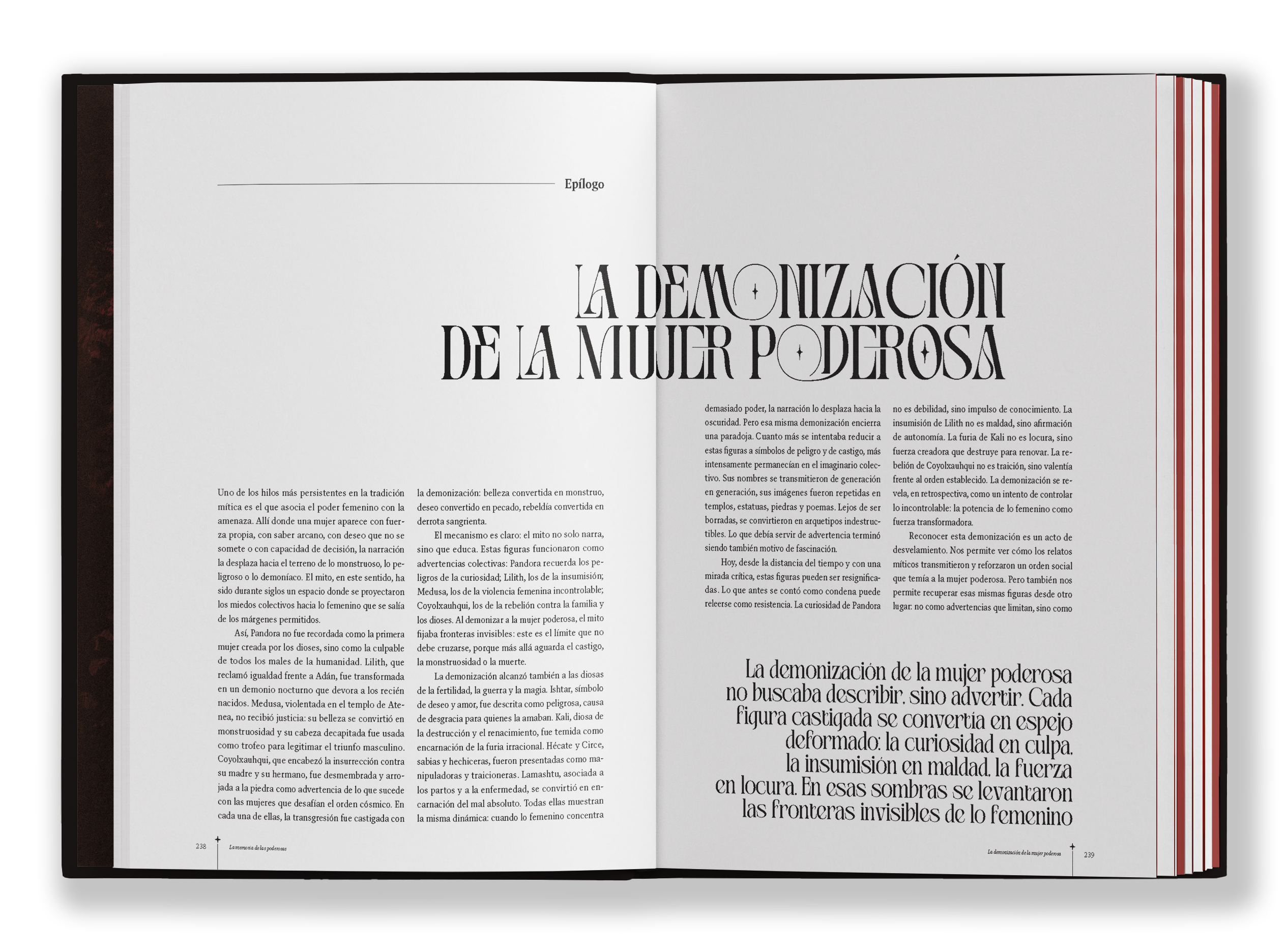
La memoria de las poderosas is a 252-page book created as a Master's thesis. It explores mythology and feminism — how the feminine has been conceived, feared, venerated, and demonised throughout myth and dominant culture — through five archetypes and a series of mythological female figures.
The book merges art and mythology from different cultures through a feminist and transgressive lens, arguing that these figures should be admired rather than feared. It is both an editorial design object and a cultural argument.
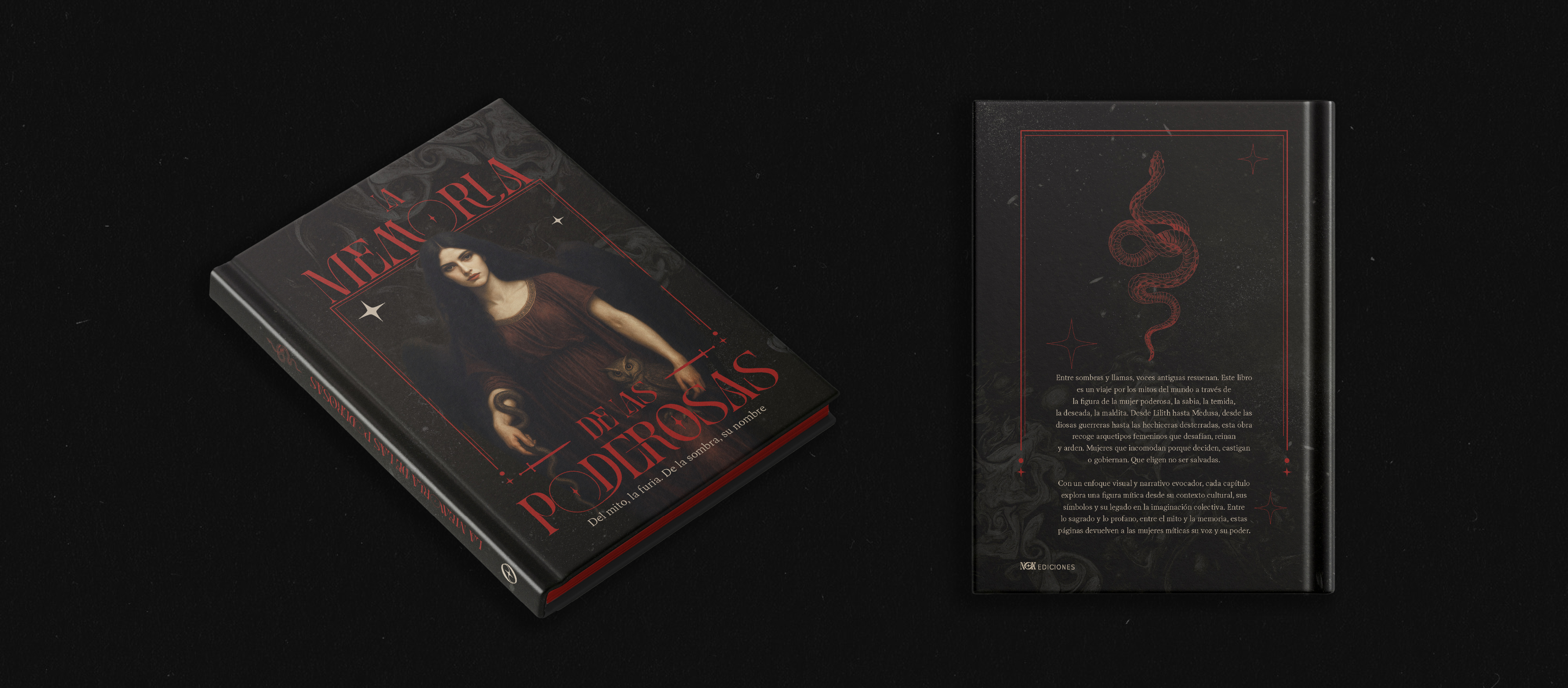
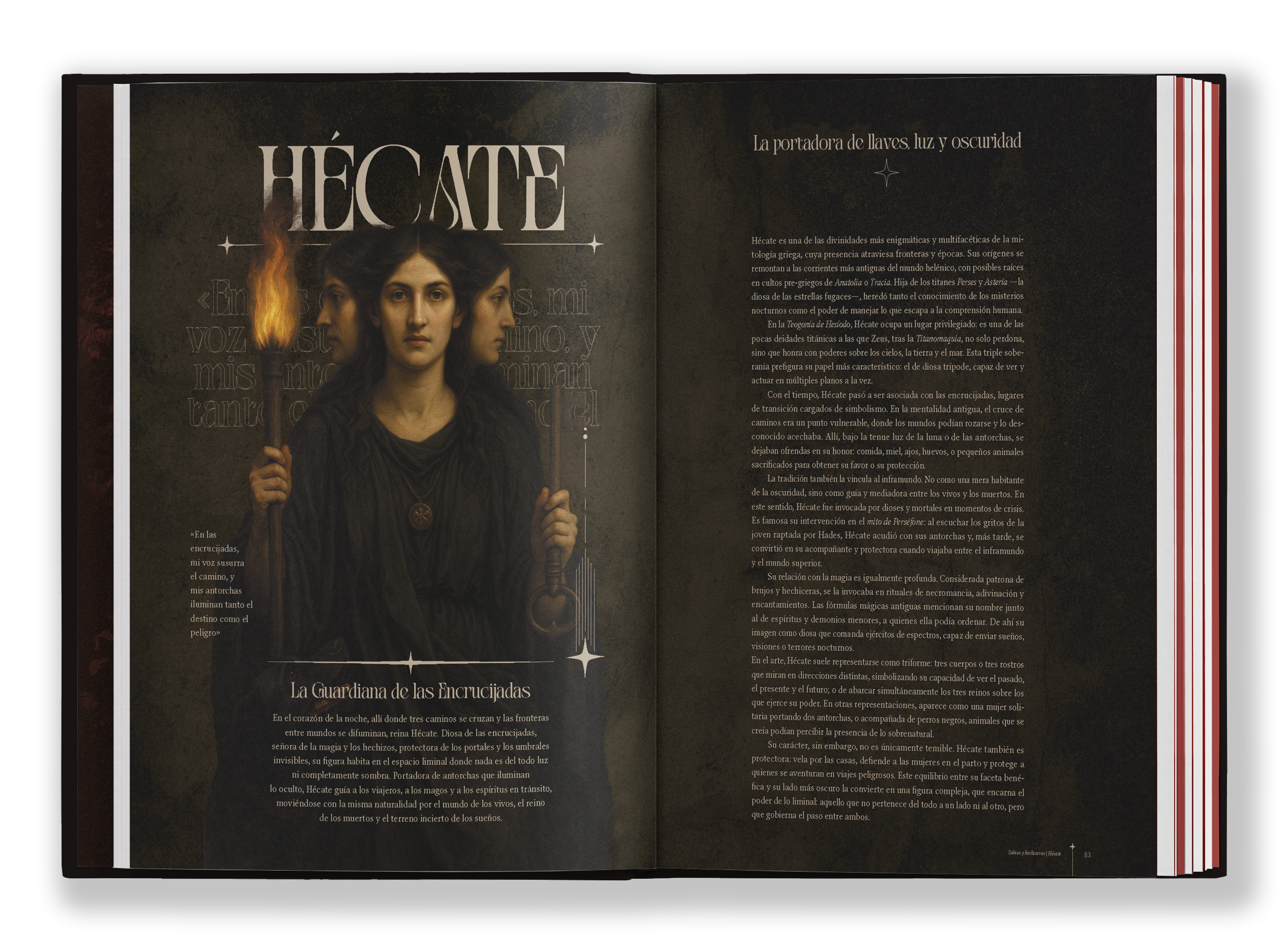
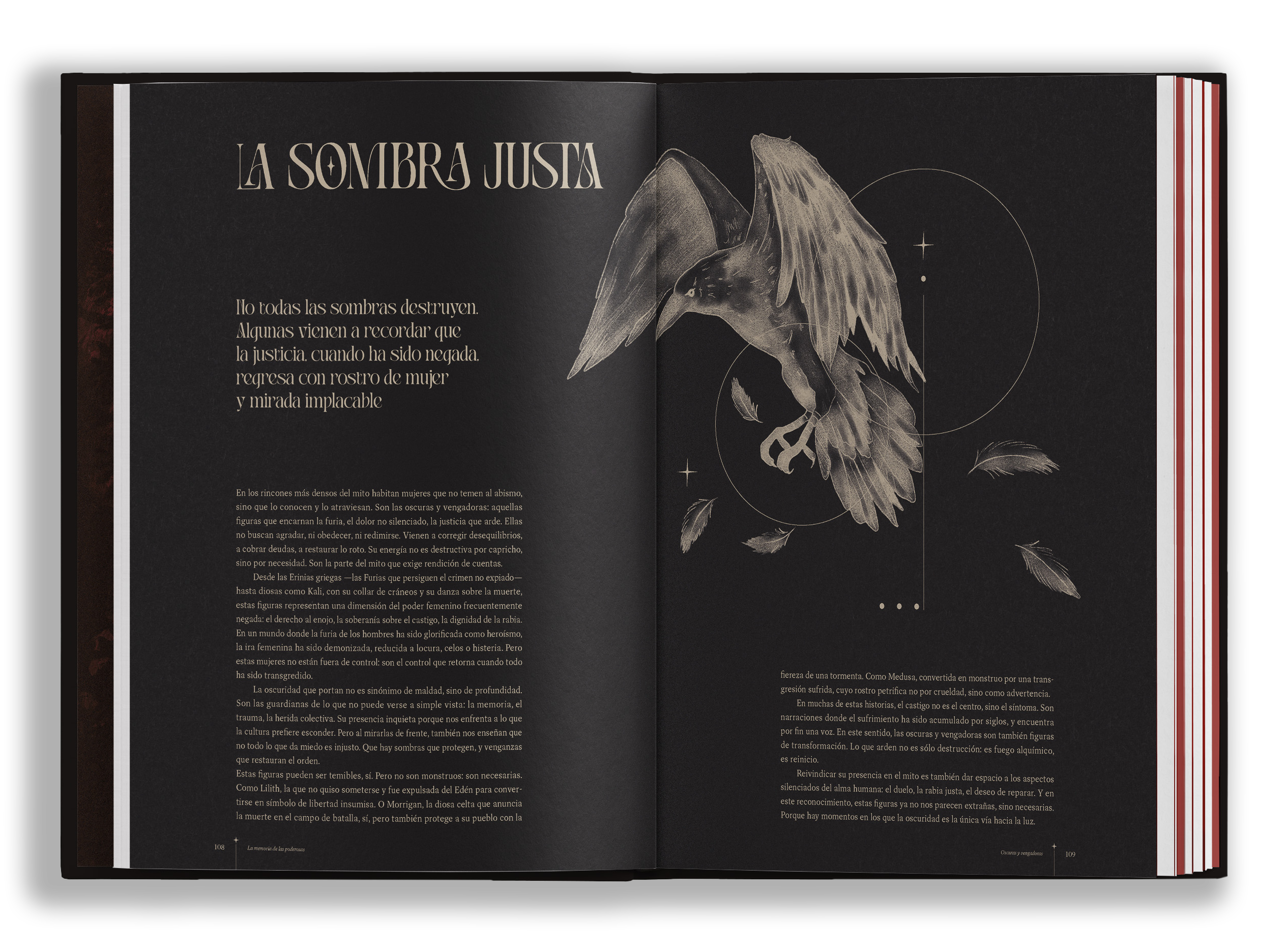
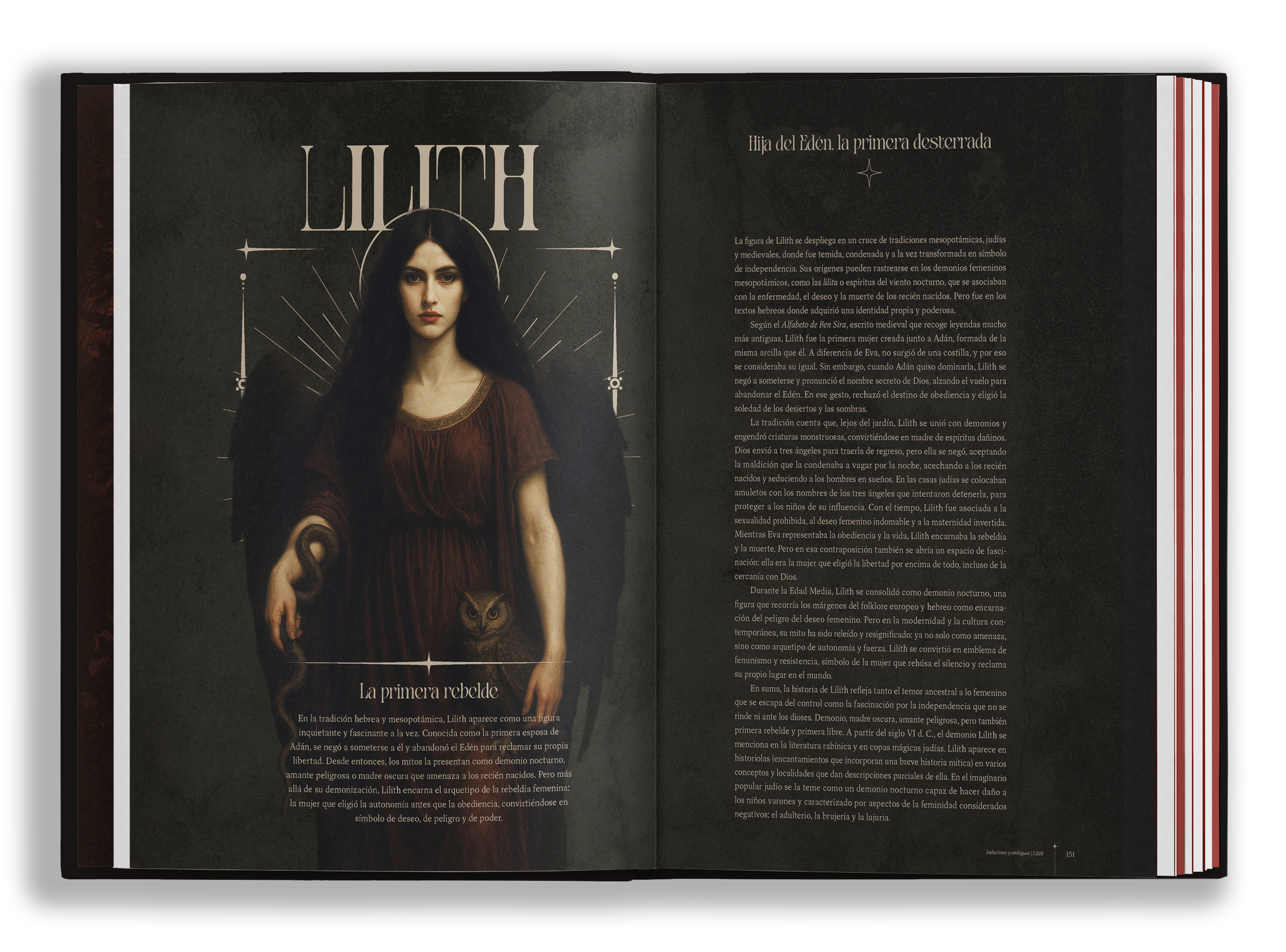
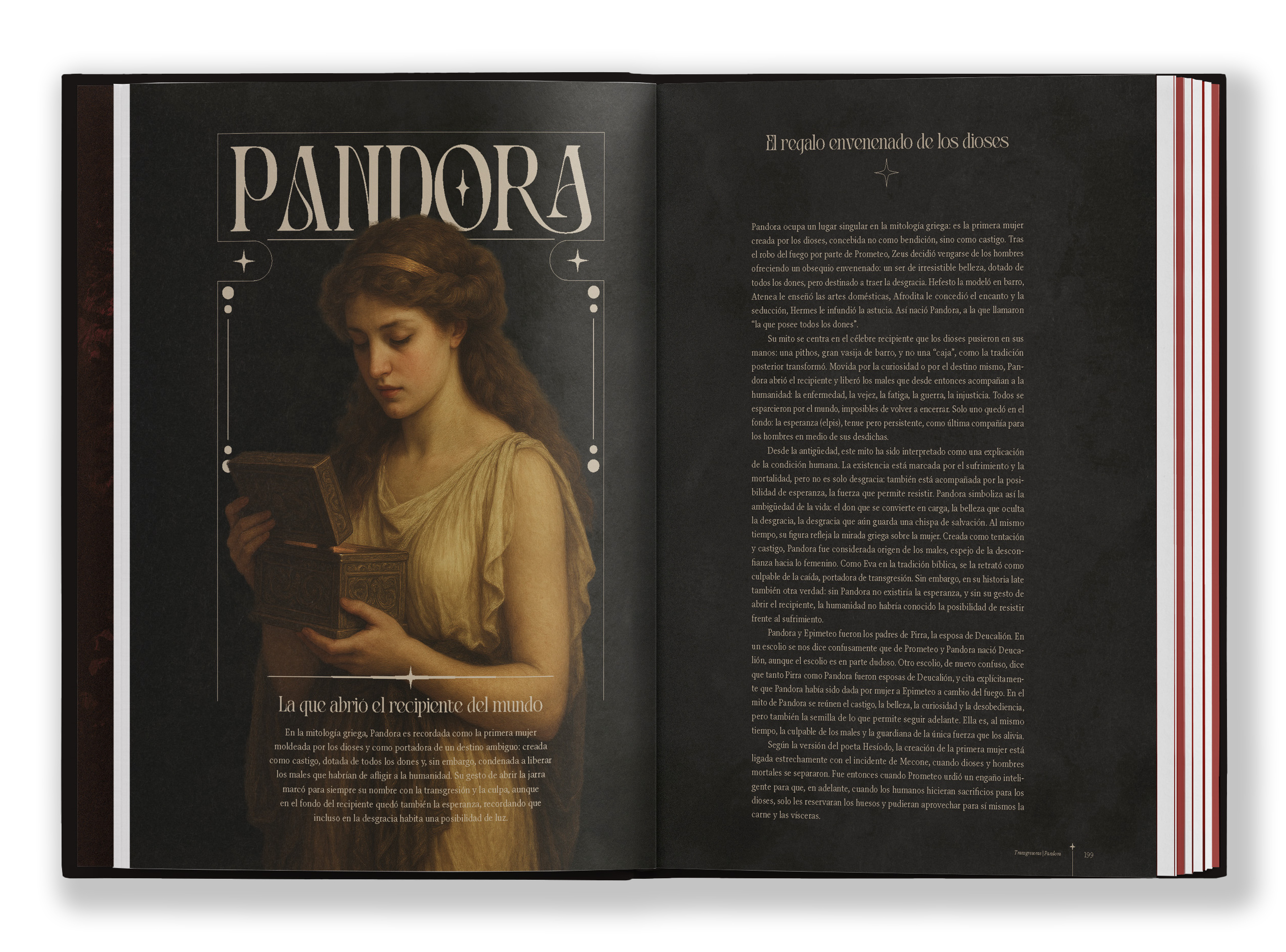
The aesthetic shaping the book's design (and its colours) was carefully considered to evoke power and rage.
It is deeply inspired by neo-Gothic or medieval futurism — a blend of styles popularised in recent years, including Dark Academia, Neo-Medieval, Gothic Futurism, and Design Brutalism.
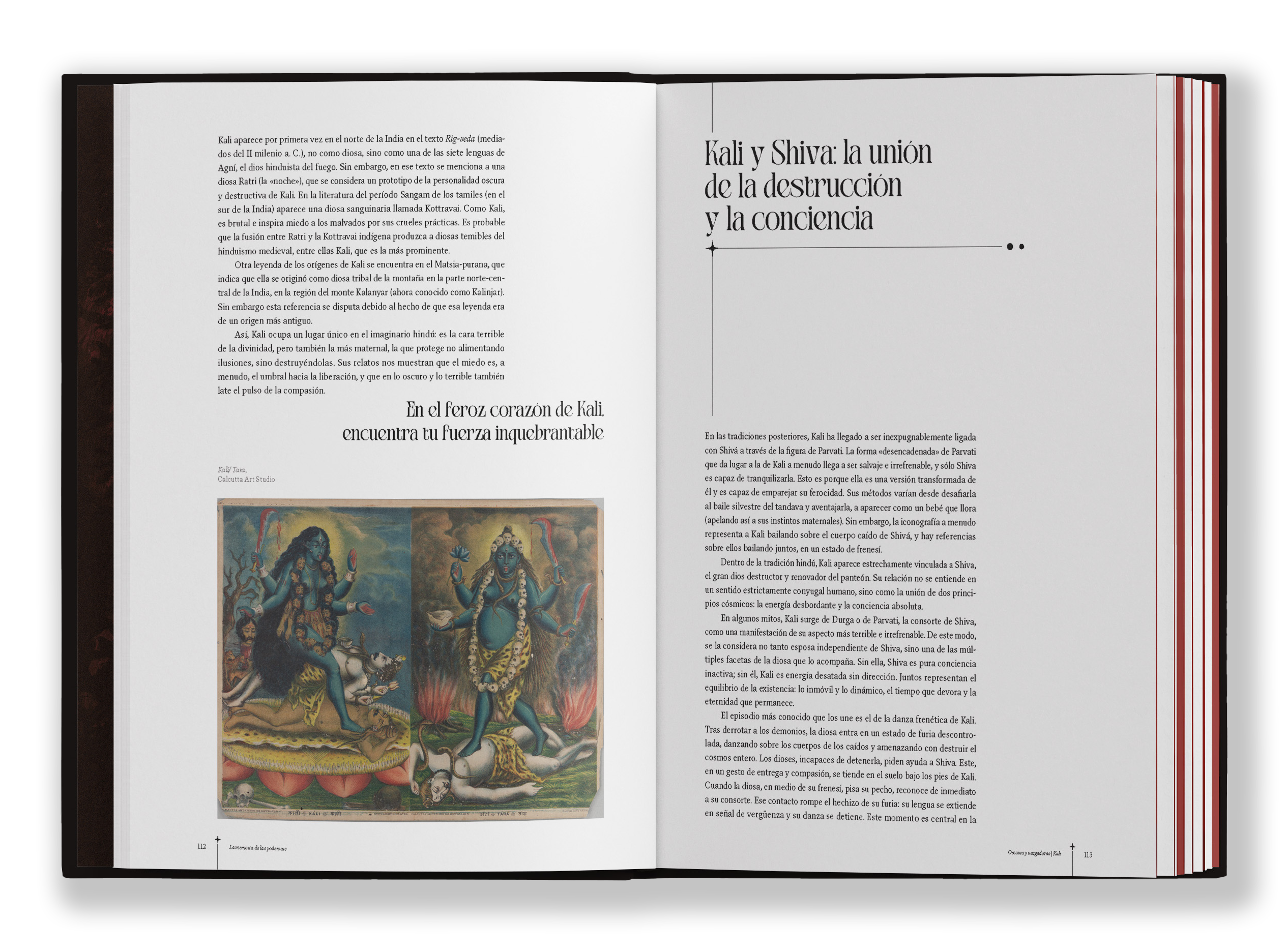
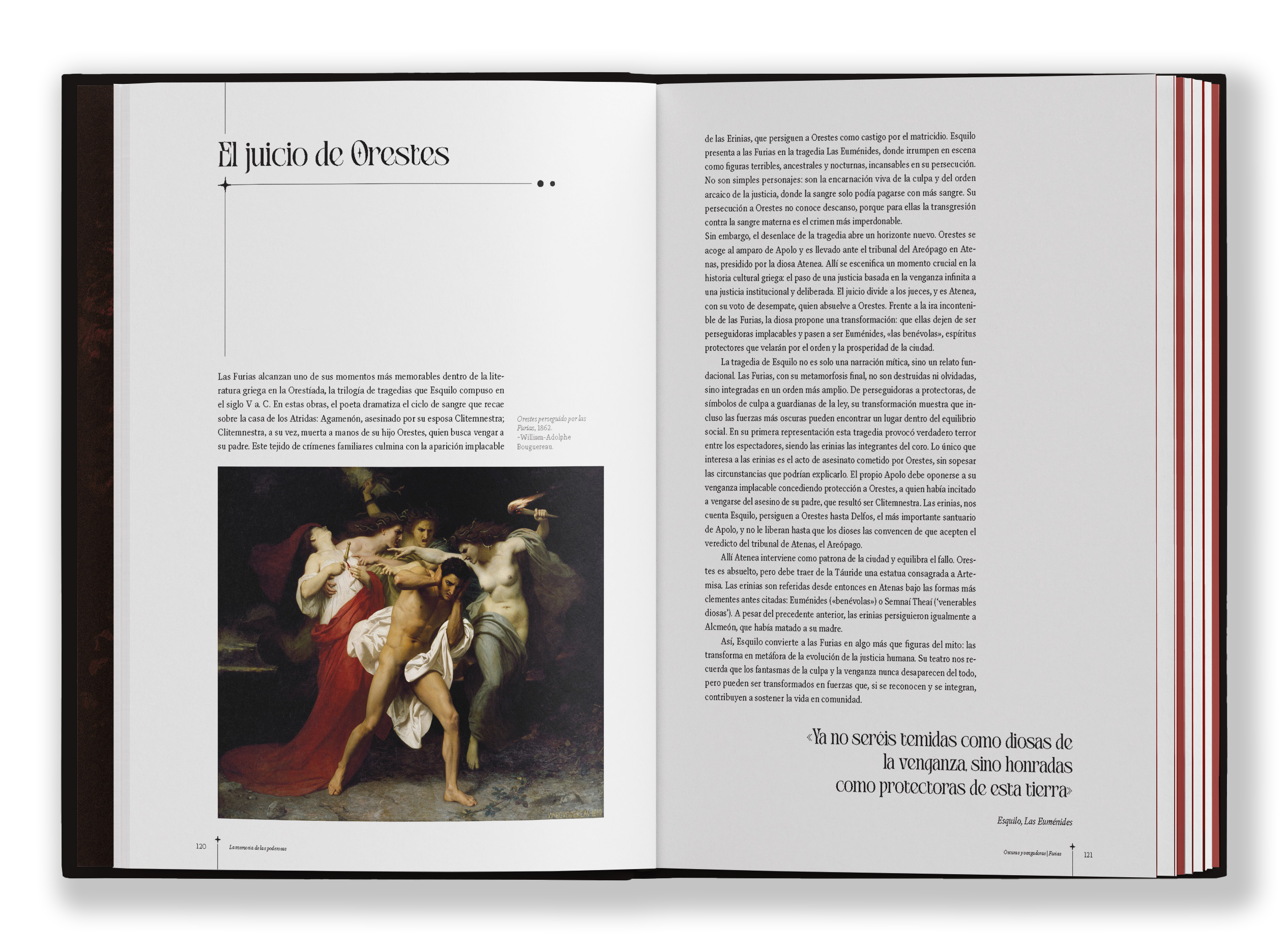
The result of combining classical or medieval art with experimental Gothic typefaces and dense graphic detail produces a dark, solemn, and almost overwhelming atmosphere.
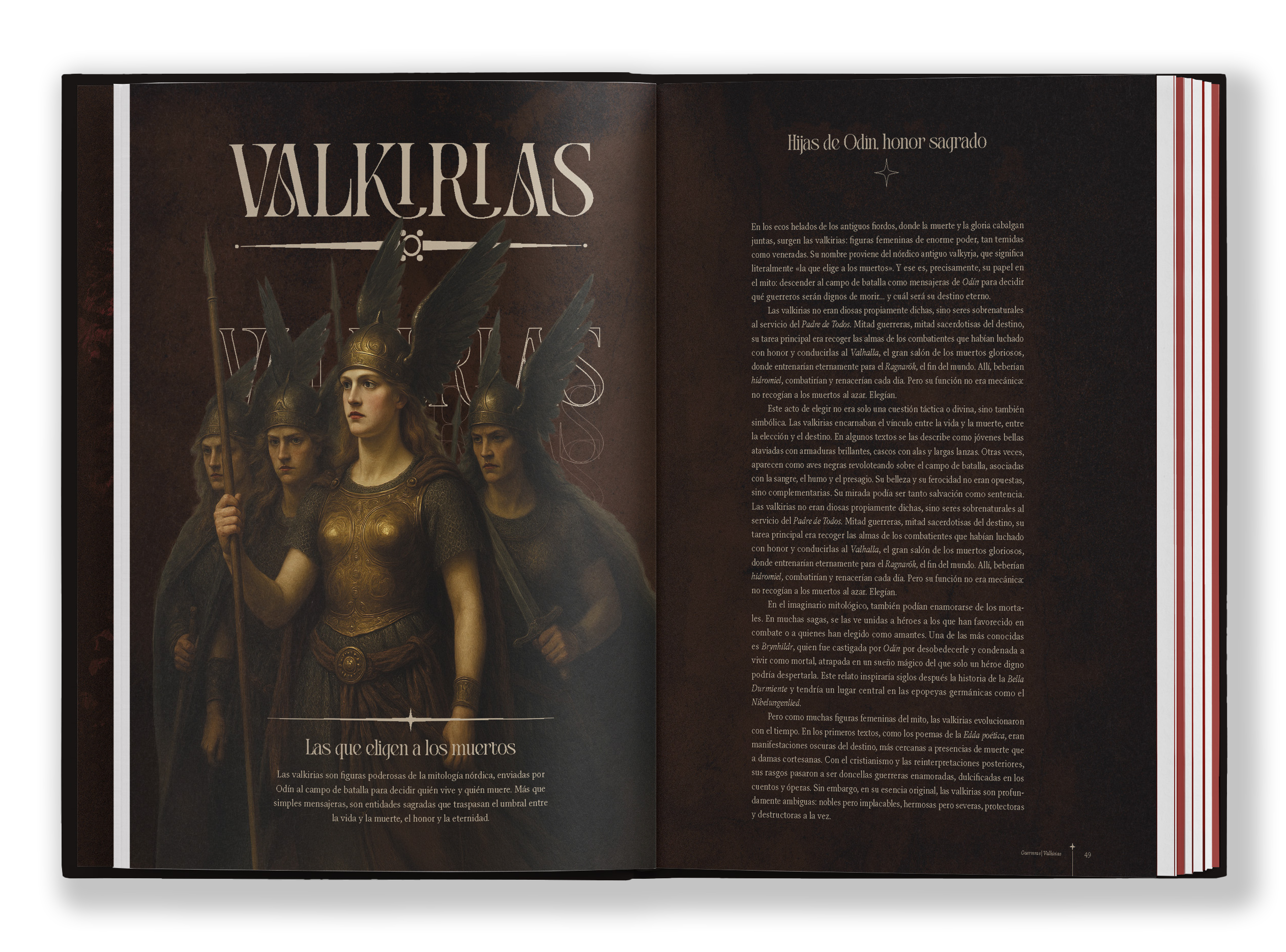
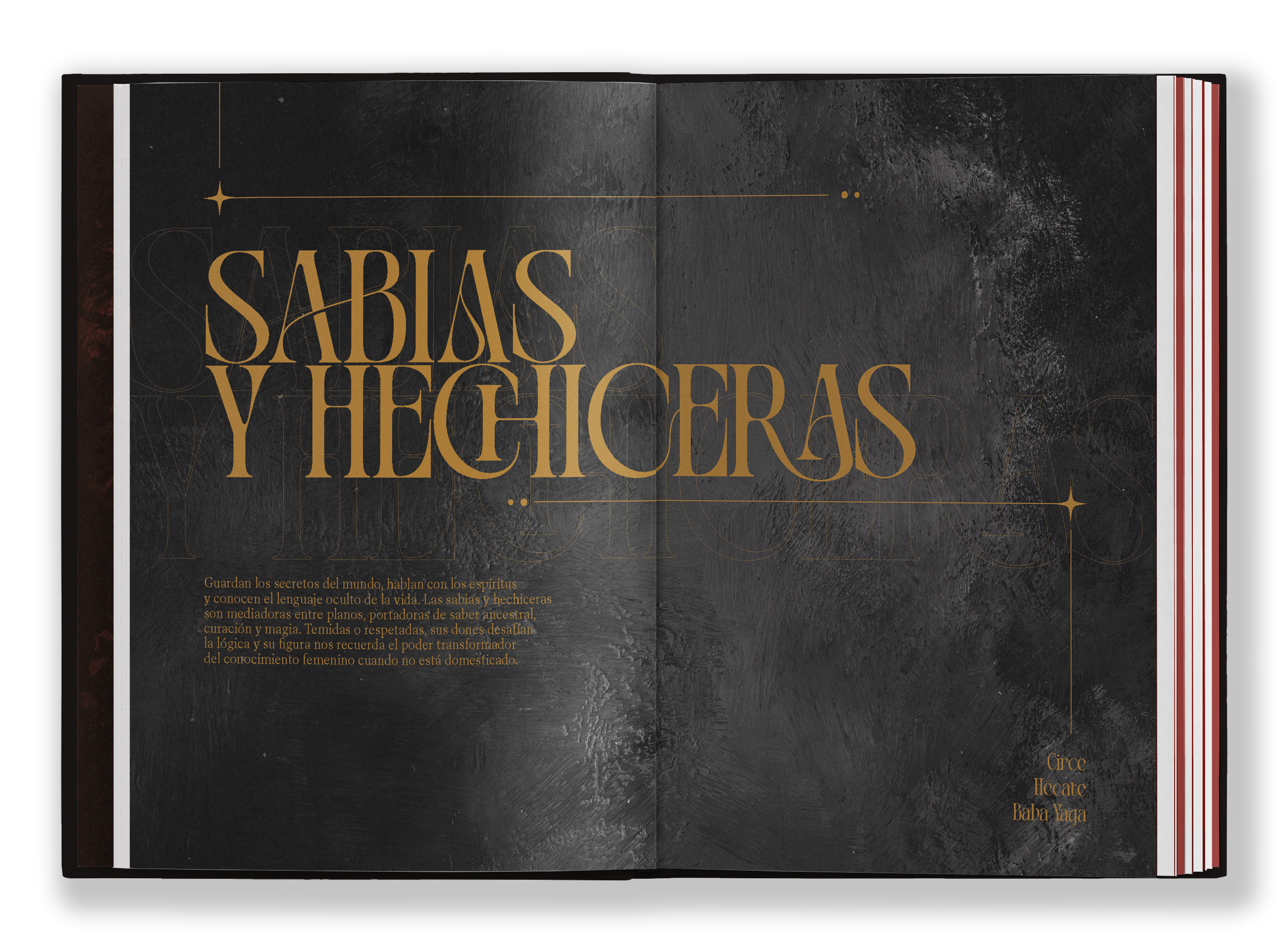
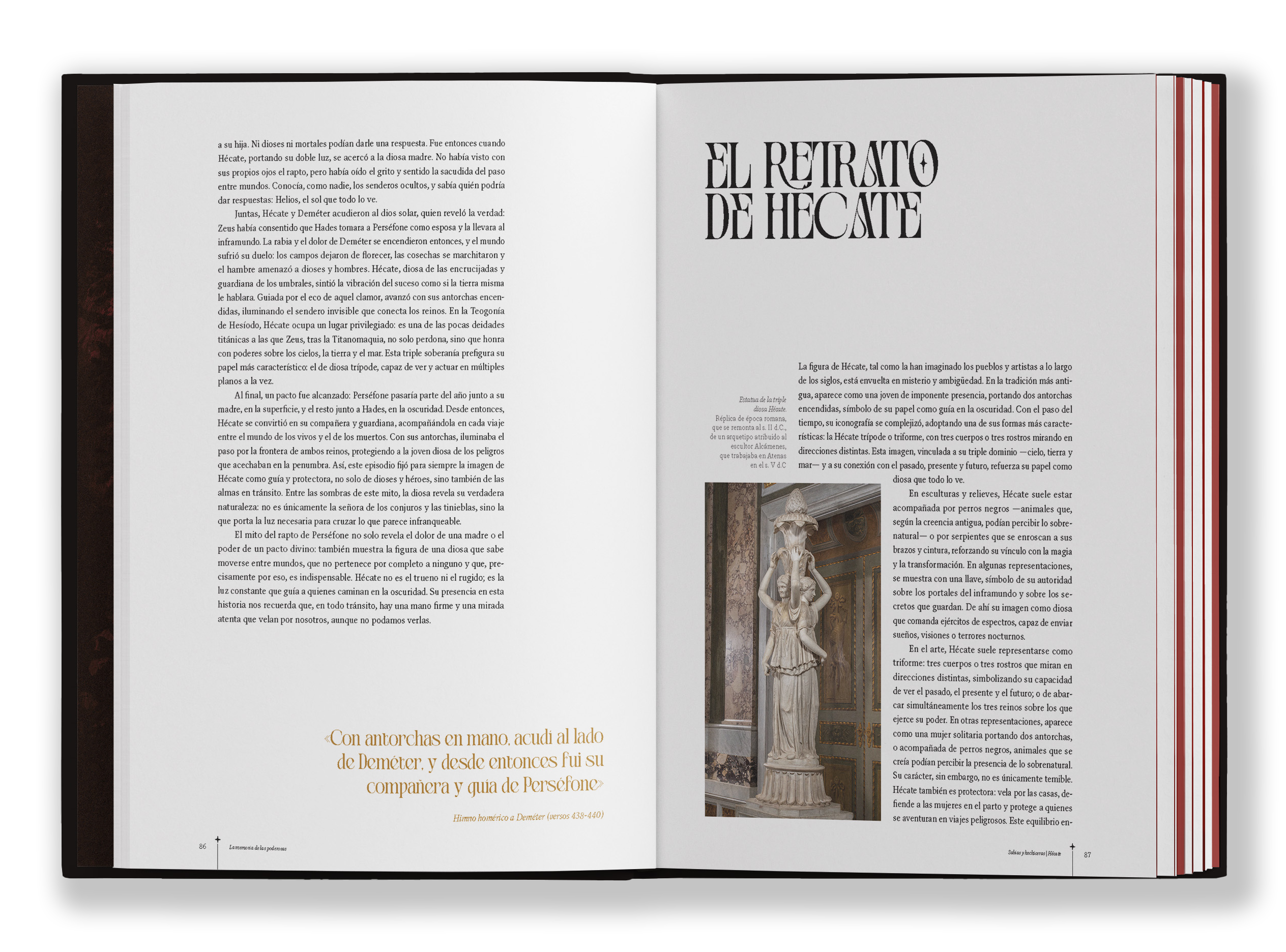
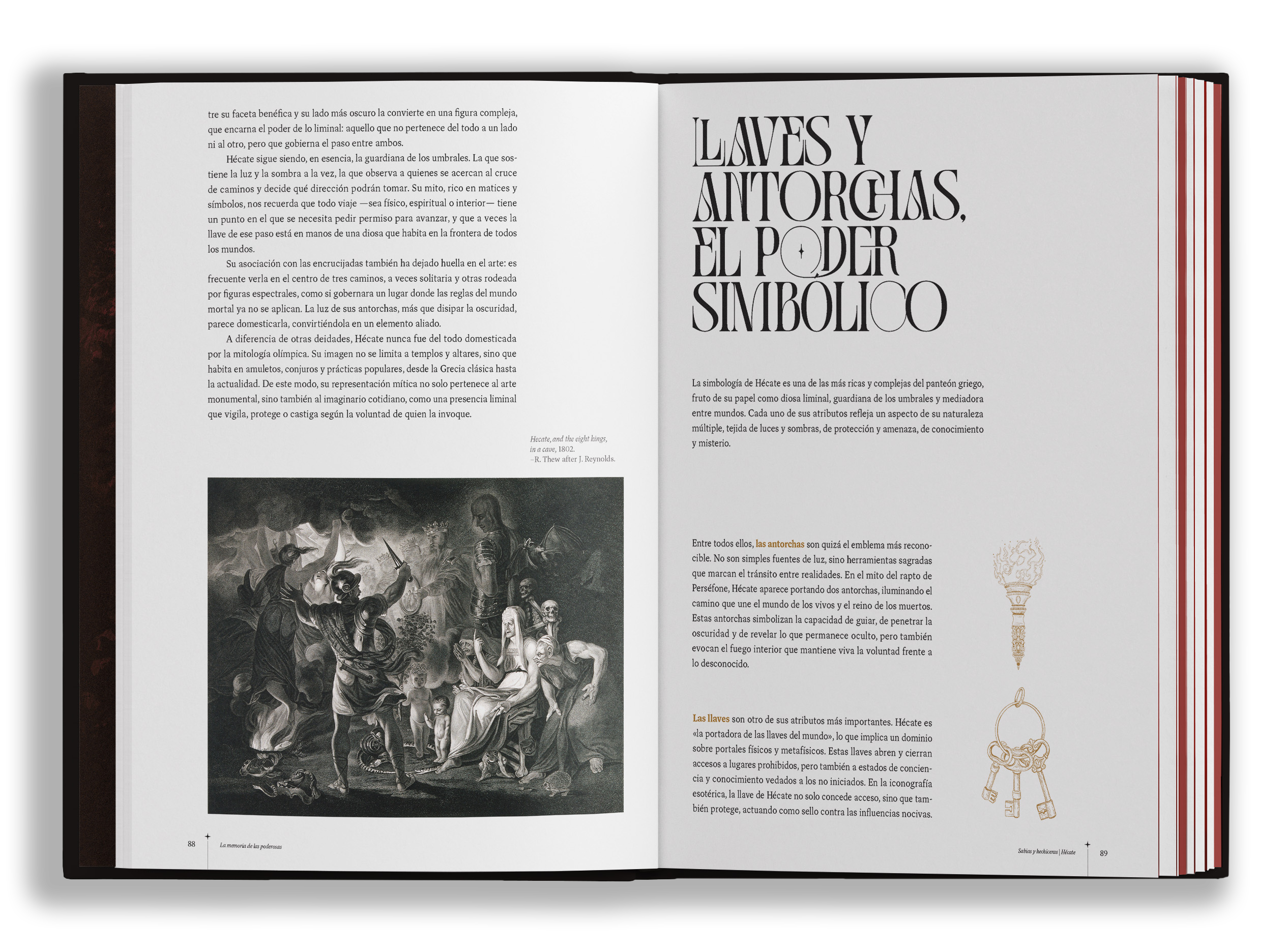
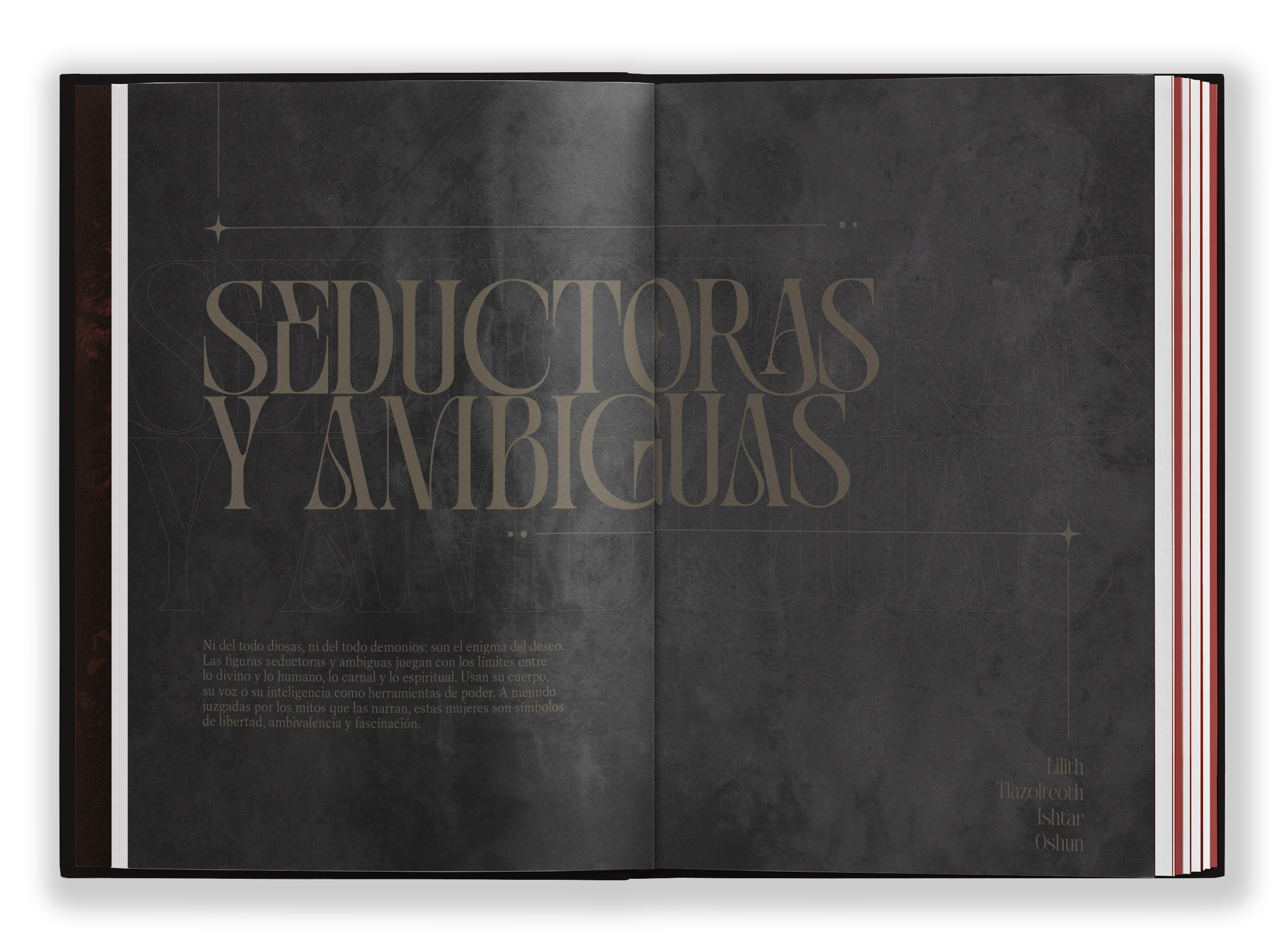
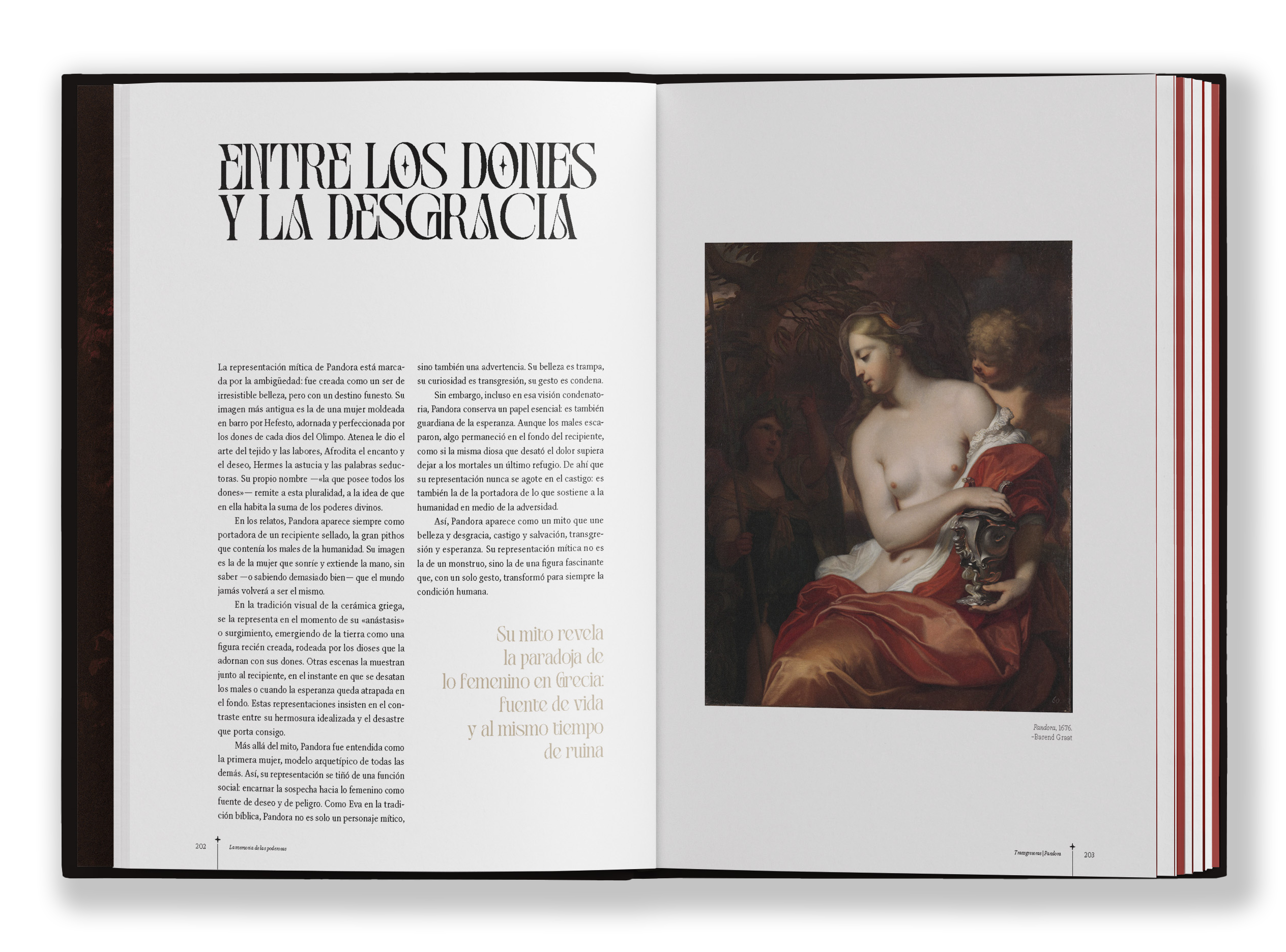
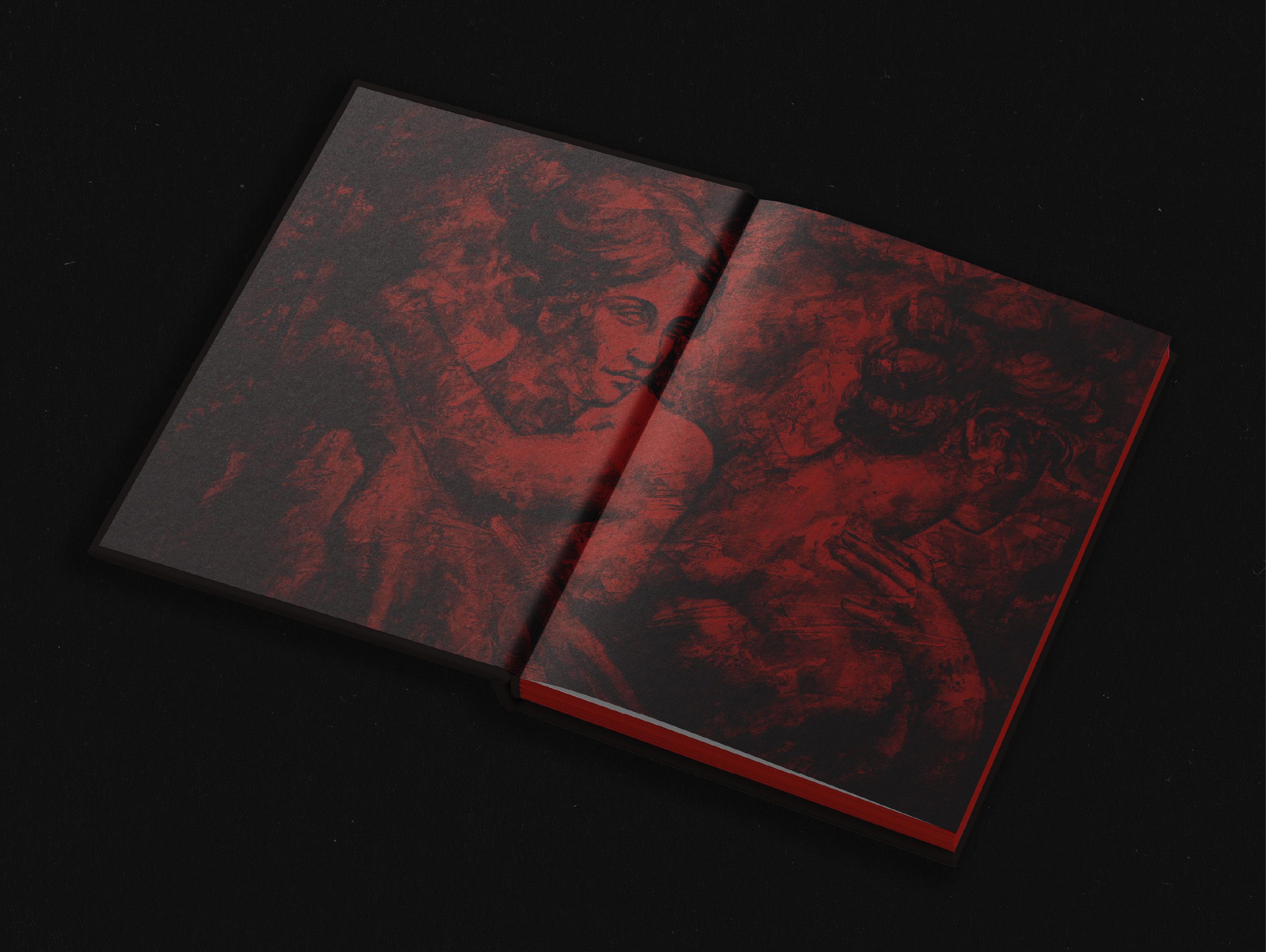
To achieve this, solemn colours (such as gold) and aggressive ones (such as red and black) are used alongside a display typeface with extremely sharp serifs and abundant ligatures and ornaments, all set against crackled-paint textures and a wide variety of geometric shapes and decorative elements.
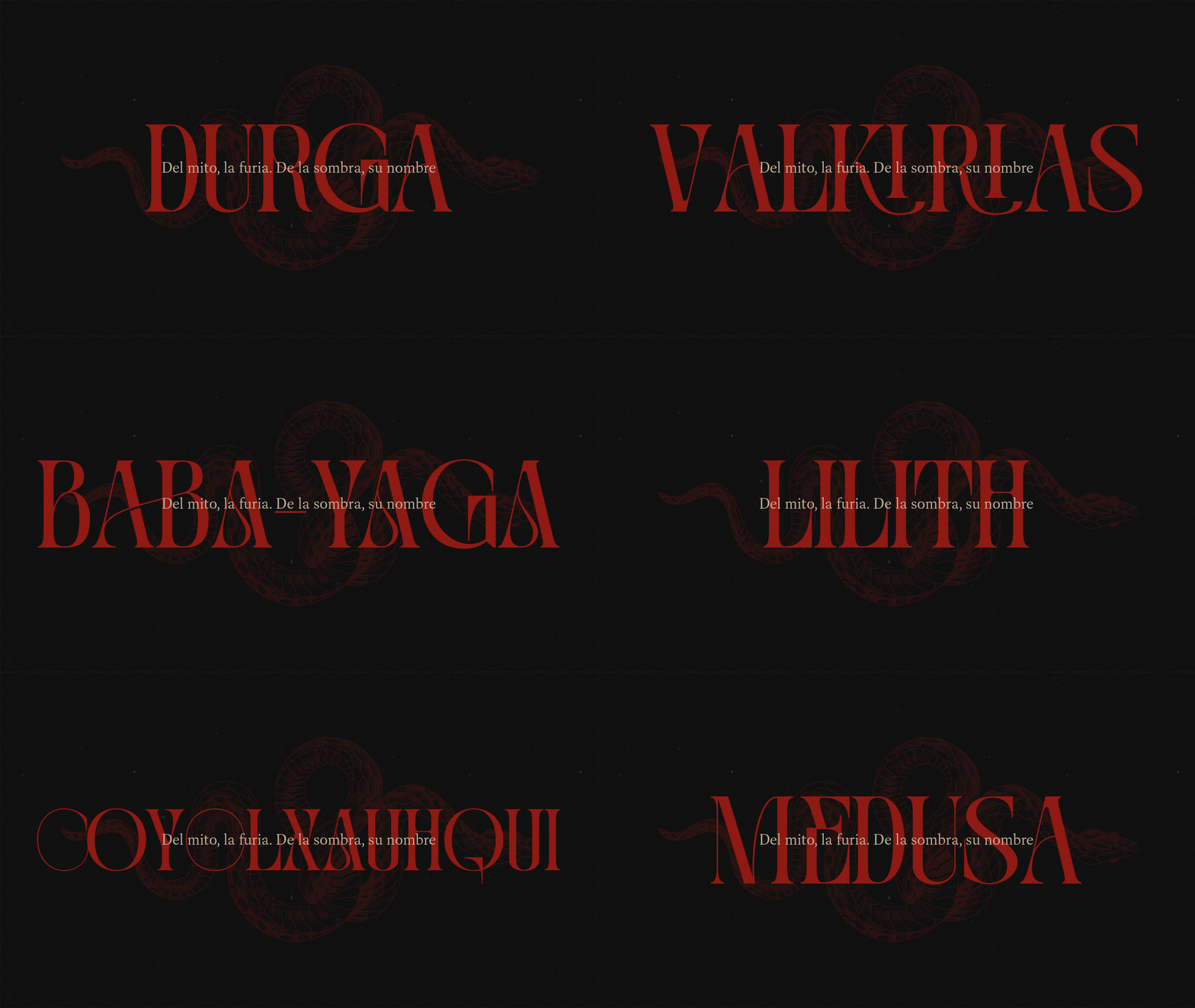
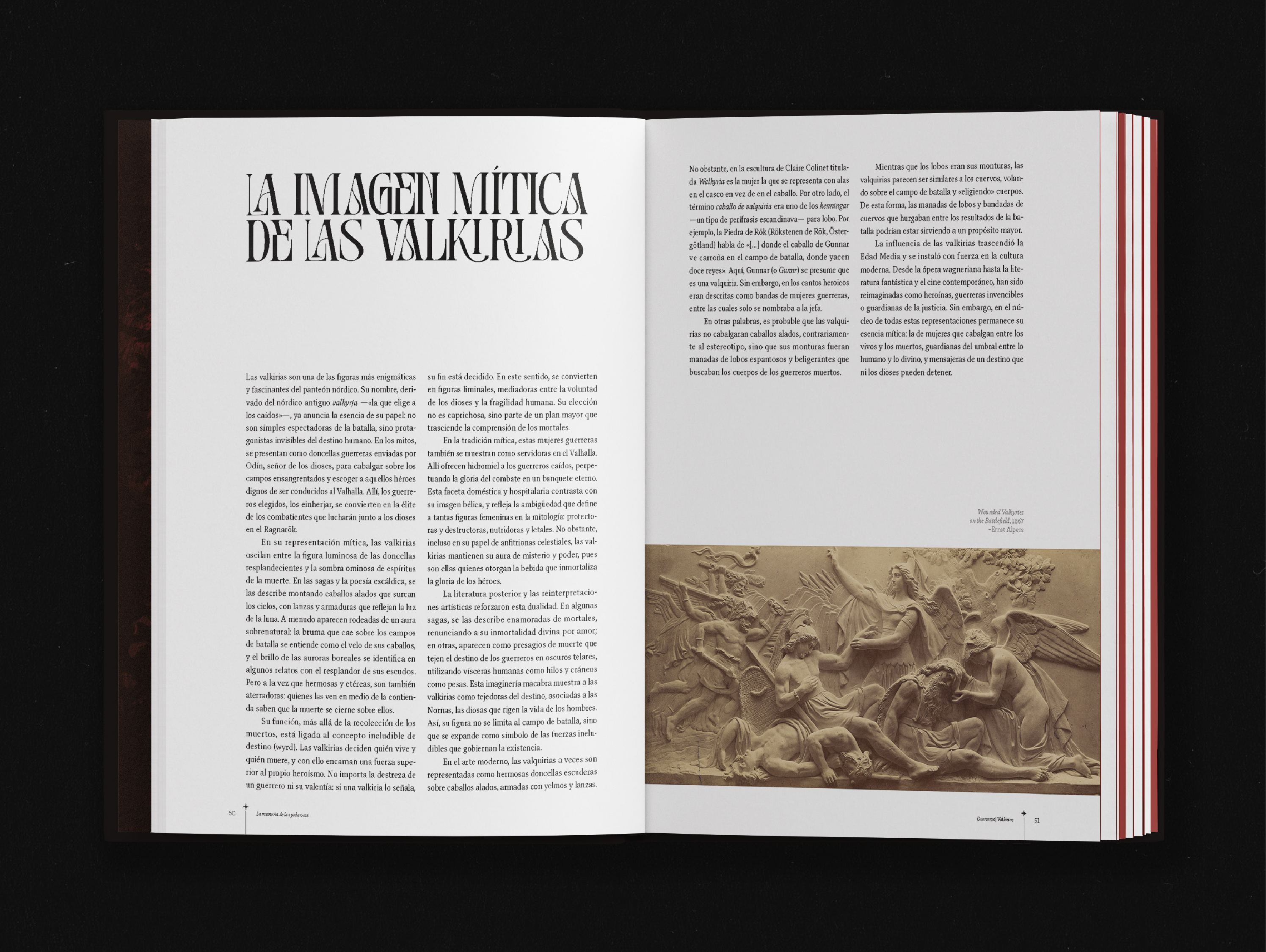
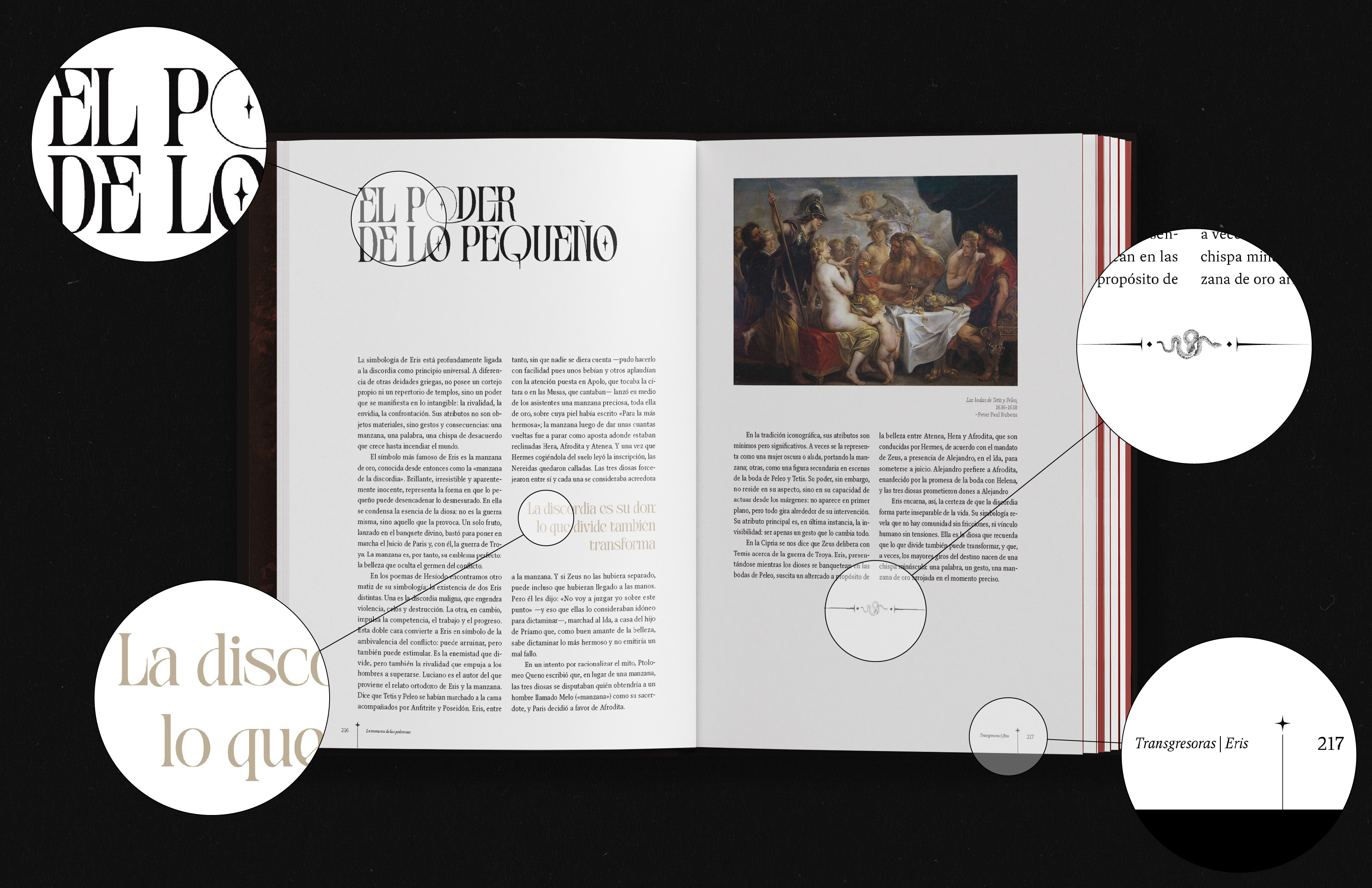





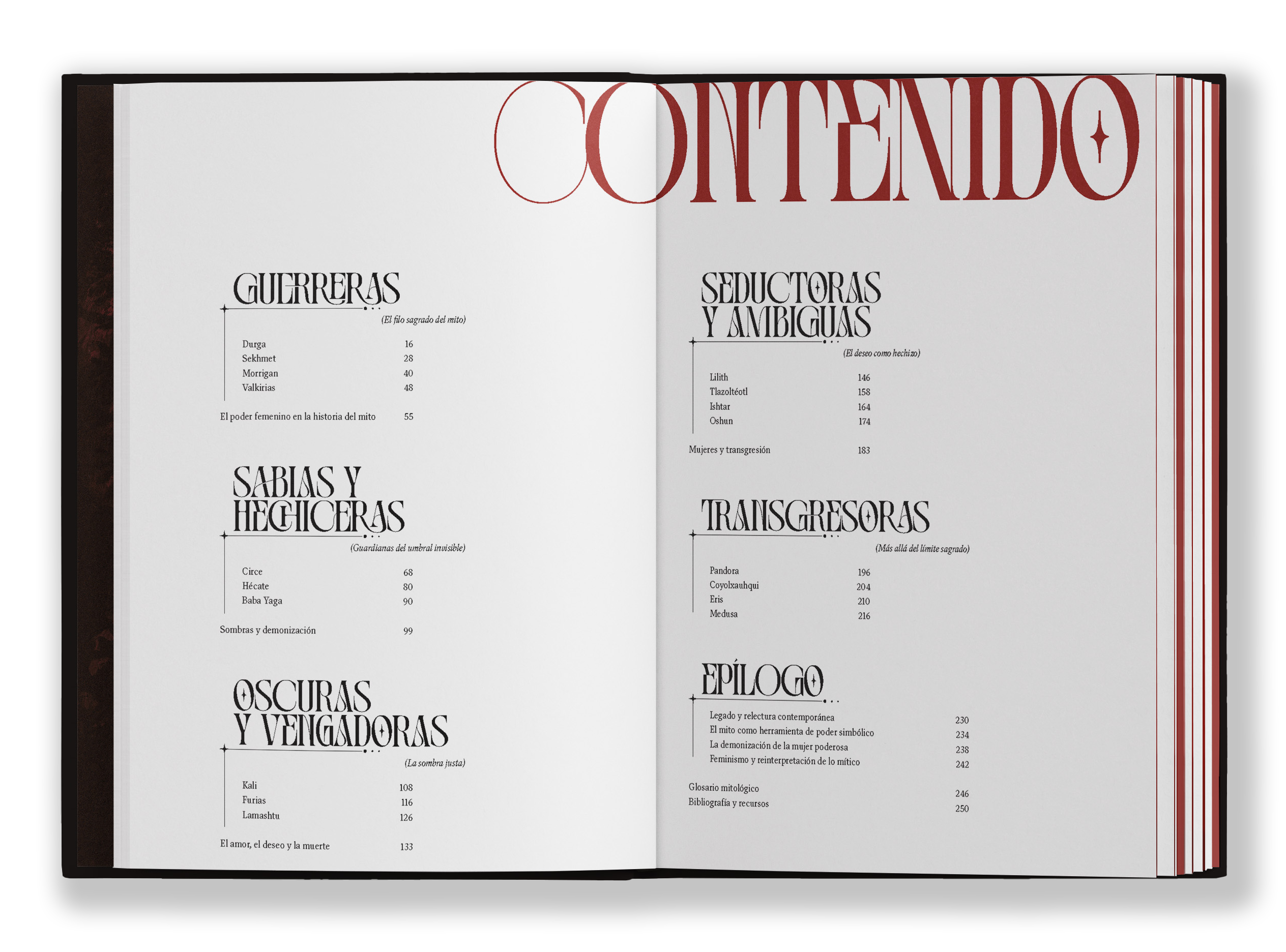
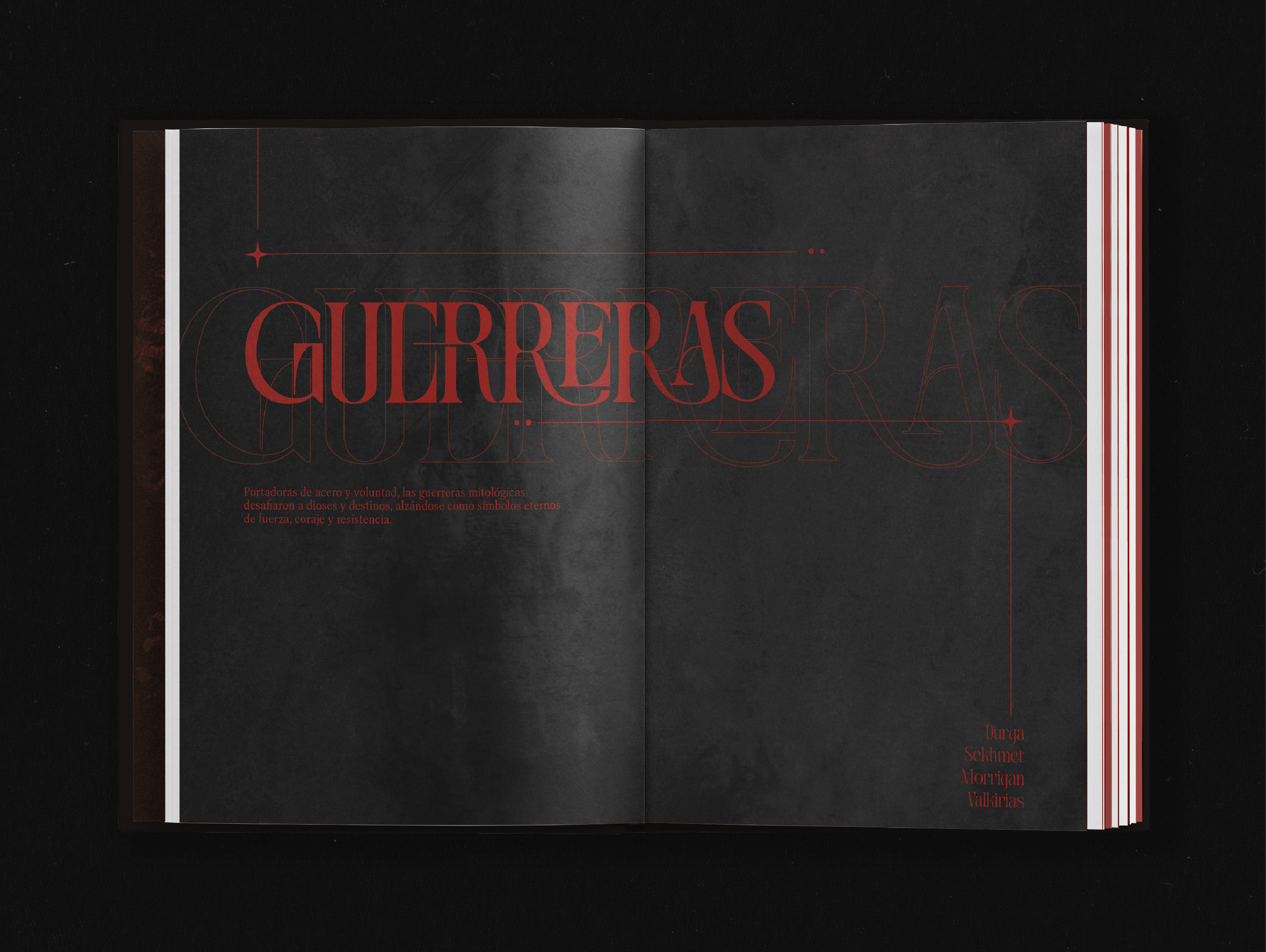
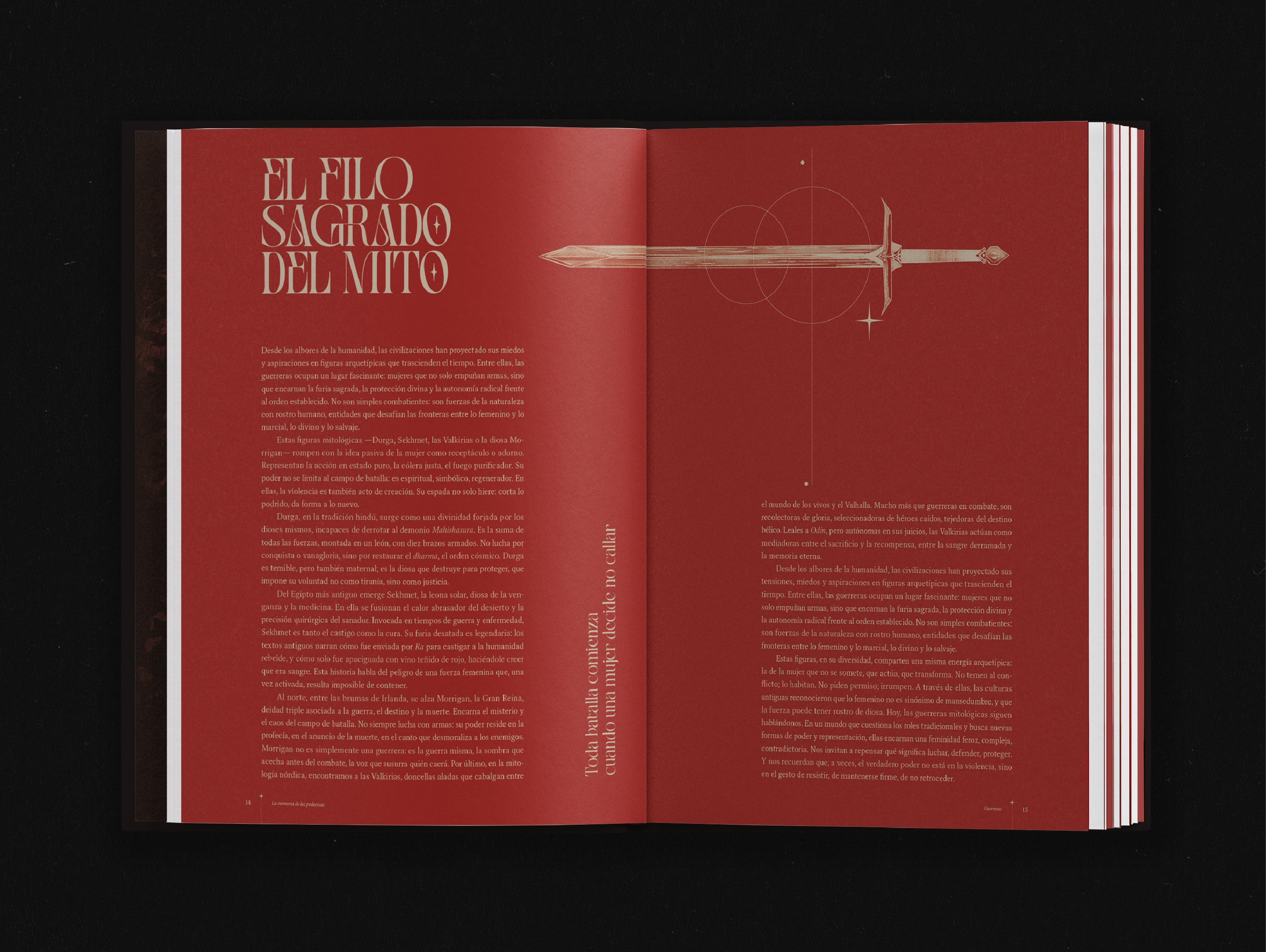
The book is structured around five archetypes, each assigned one of the five palette colours: Warriors (rust), Wise Women & Sorceresses (amber), Dark & Vengeful (charcoal), Seductive & Ambiguous (tobacco), and Transgressors (parchment).
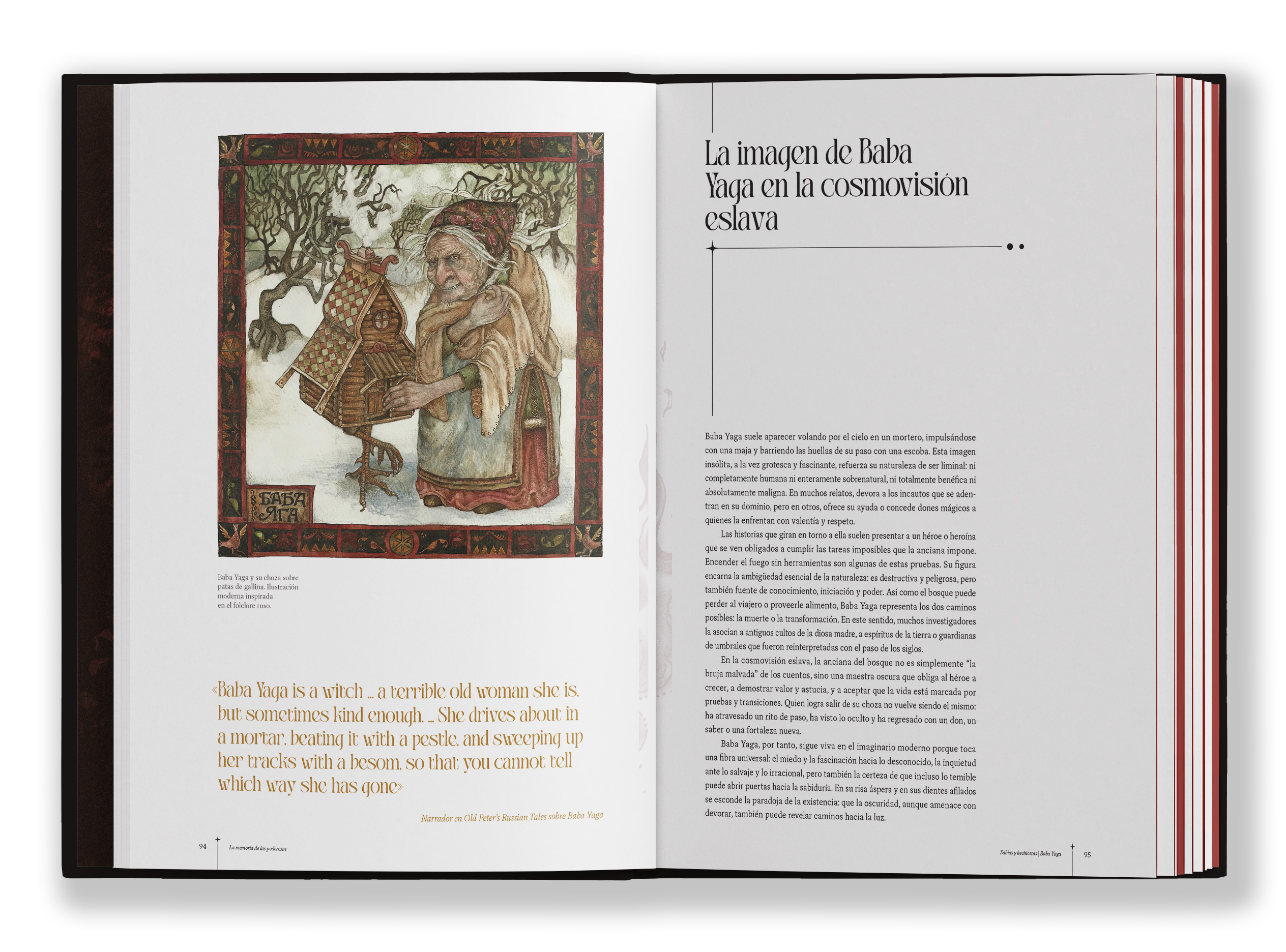
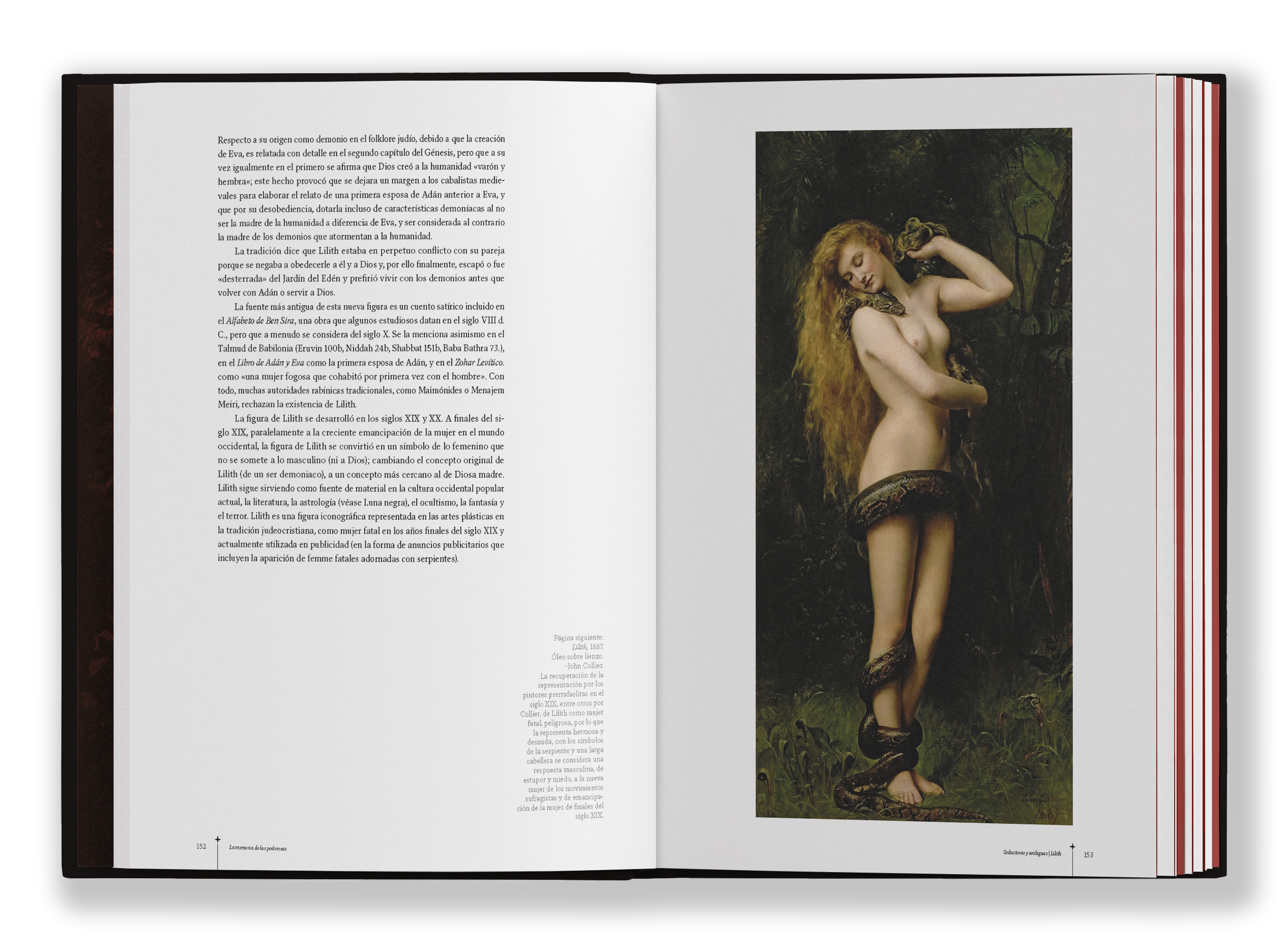
Within each archetype, feminine figures from myth across different cultures — demonised or labelled as witches for one reason or another — include Morrigan, Baba Yaga, Lilith, and Medusa. Each archetype has its colour, and its chapter openers and pull quotes carry that colour to sustain the book's narrative thread.
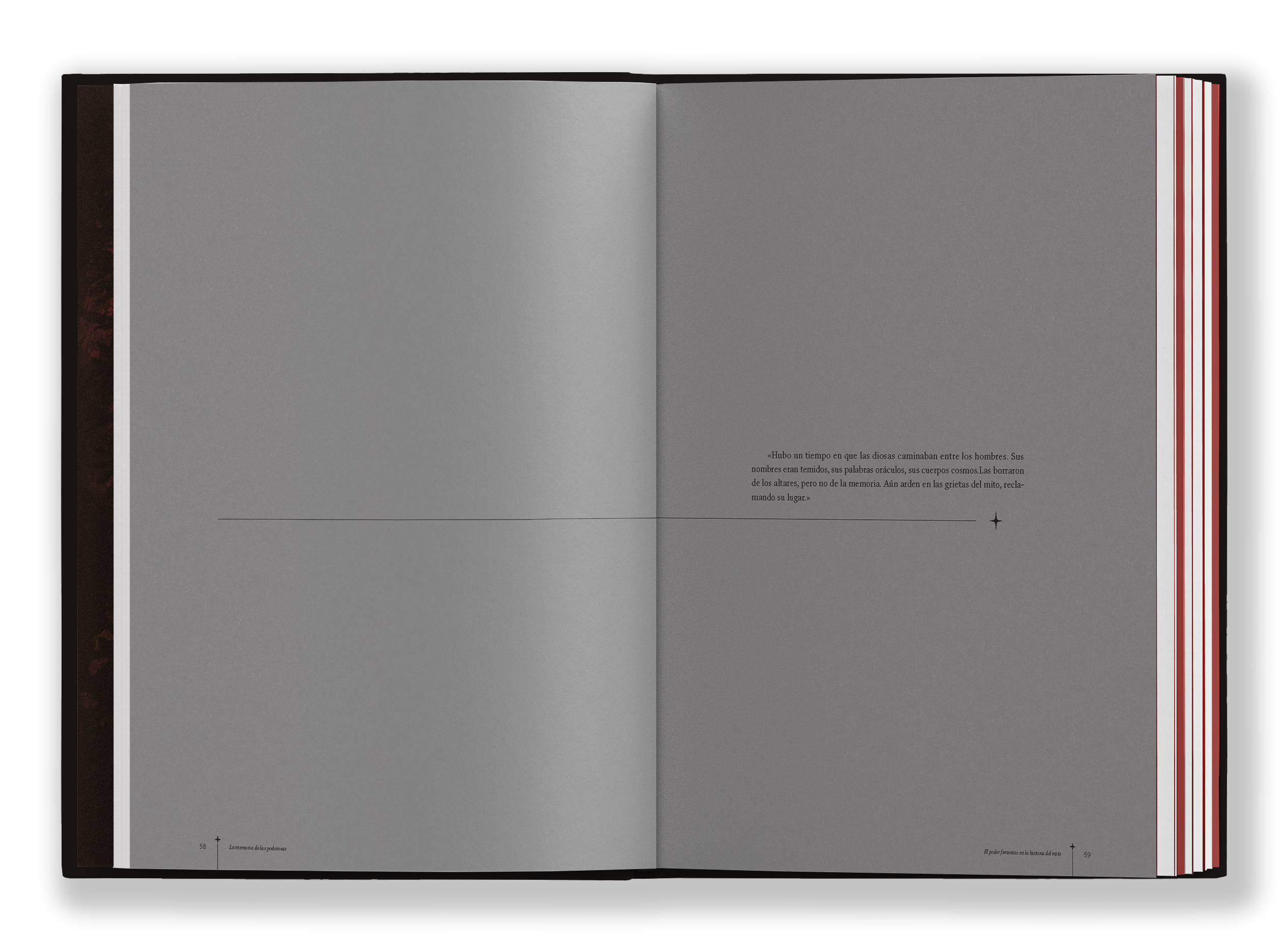
Entre arquetipos, hay unos interludios que tratan temas como “mujeres y transgresión” o “el amor, el deseo y la muerte”, impresos en papel gris para romer con la monotonía del diseño.
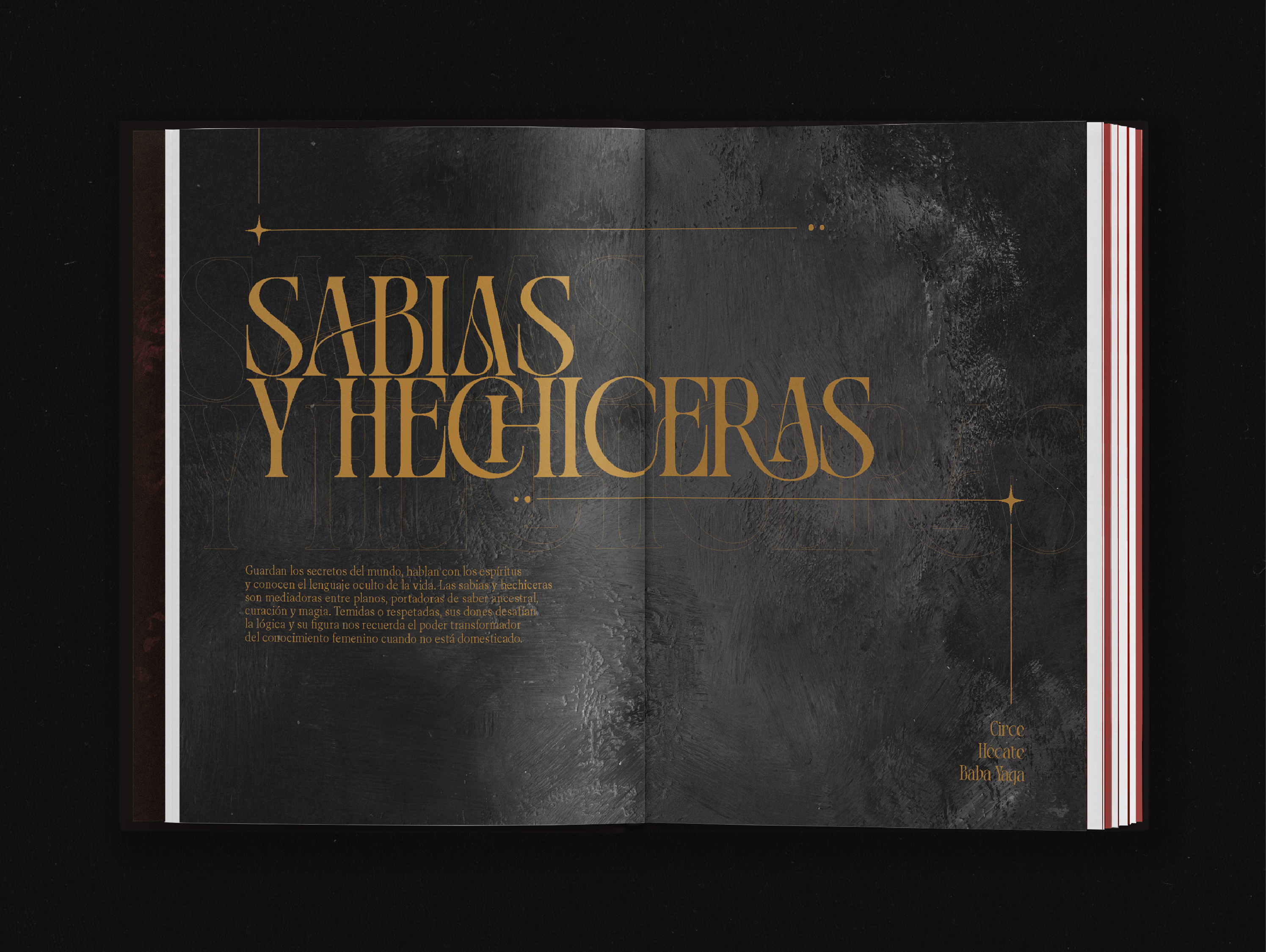
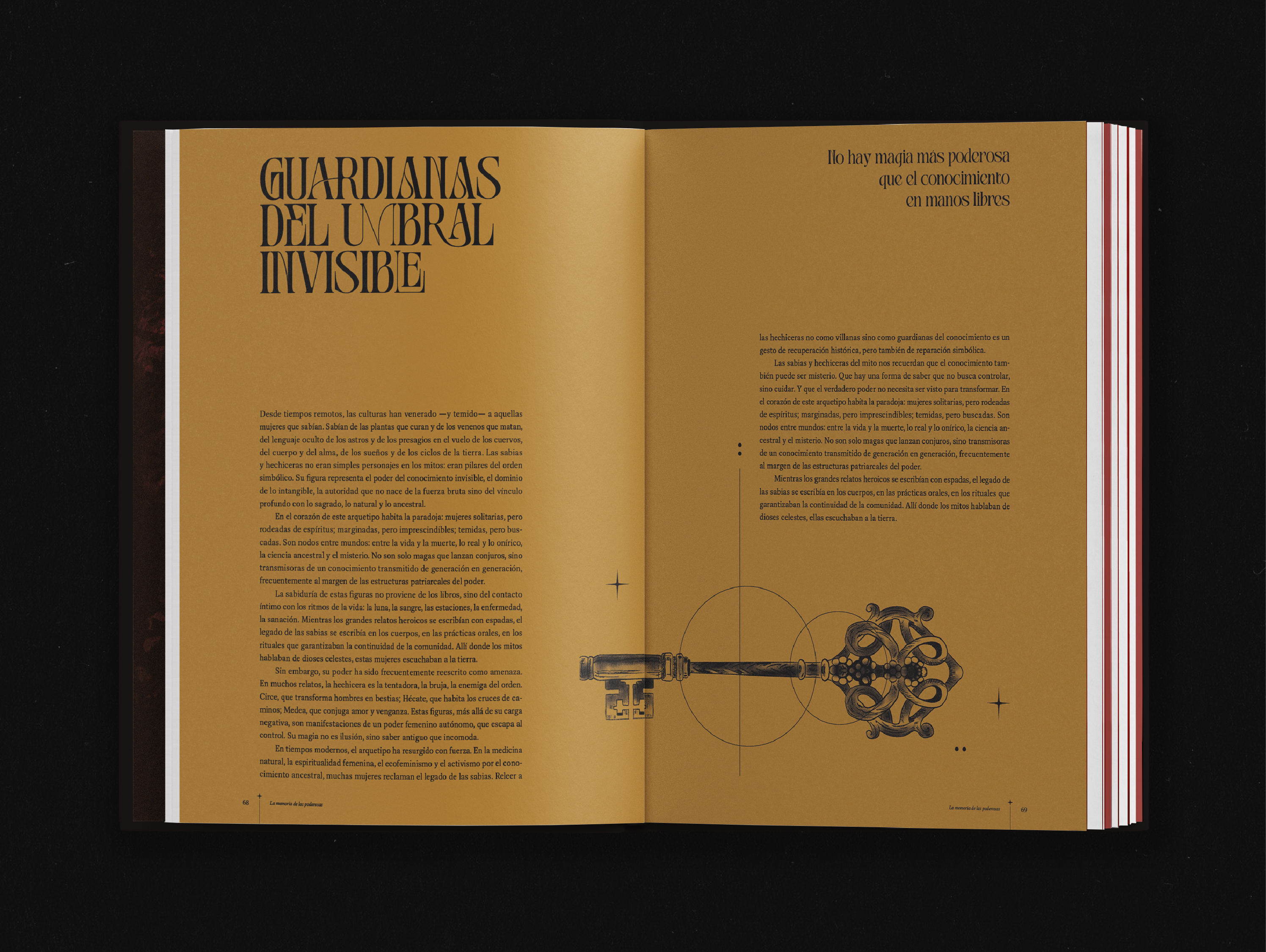
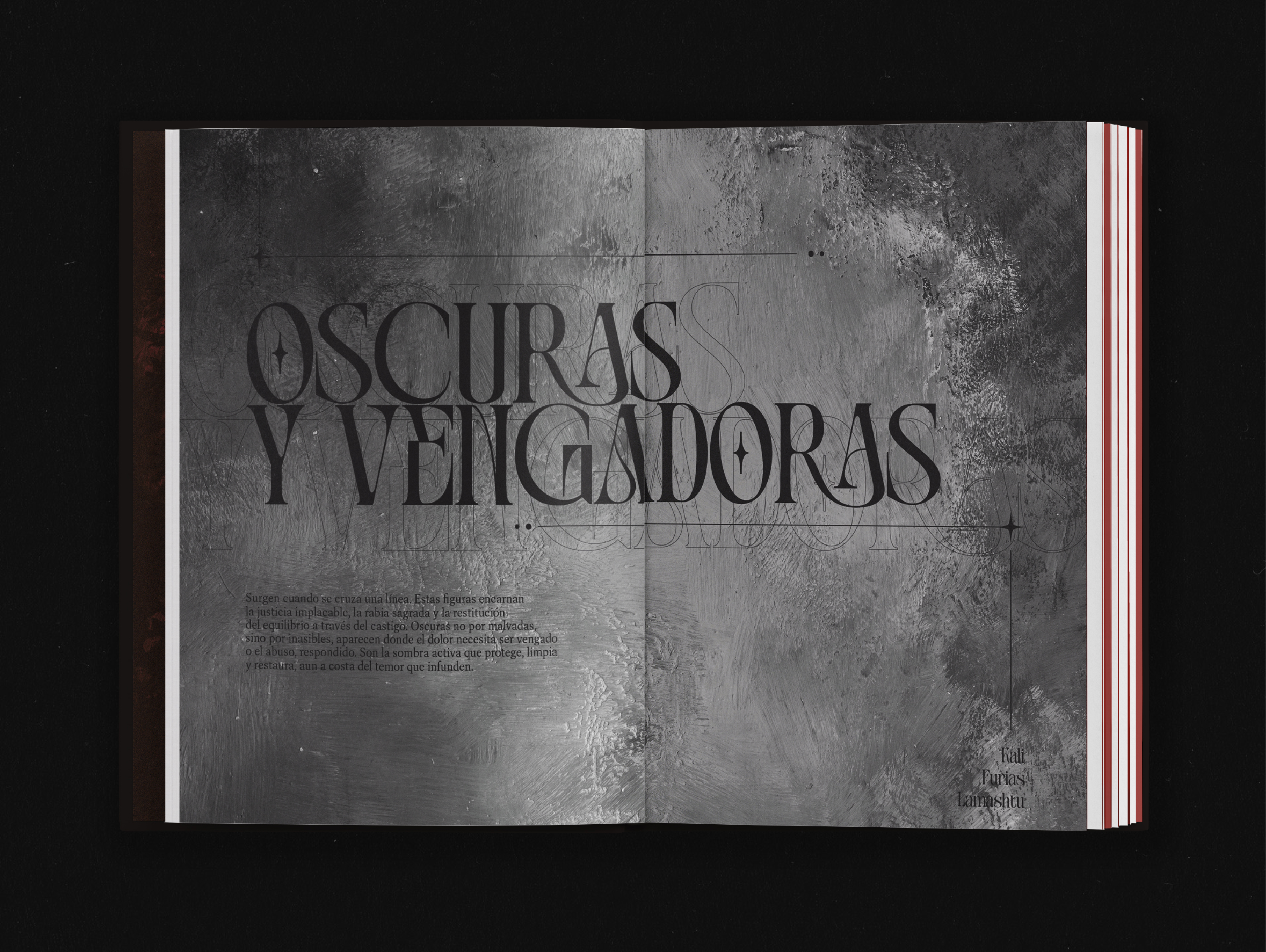
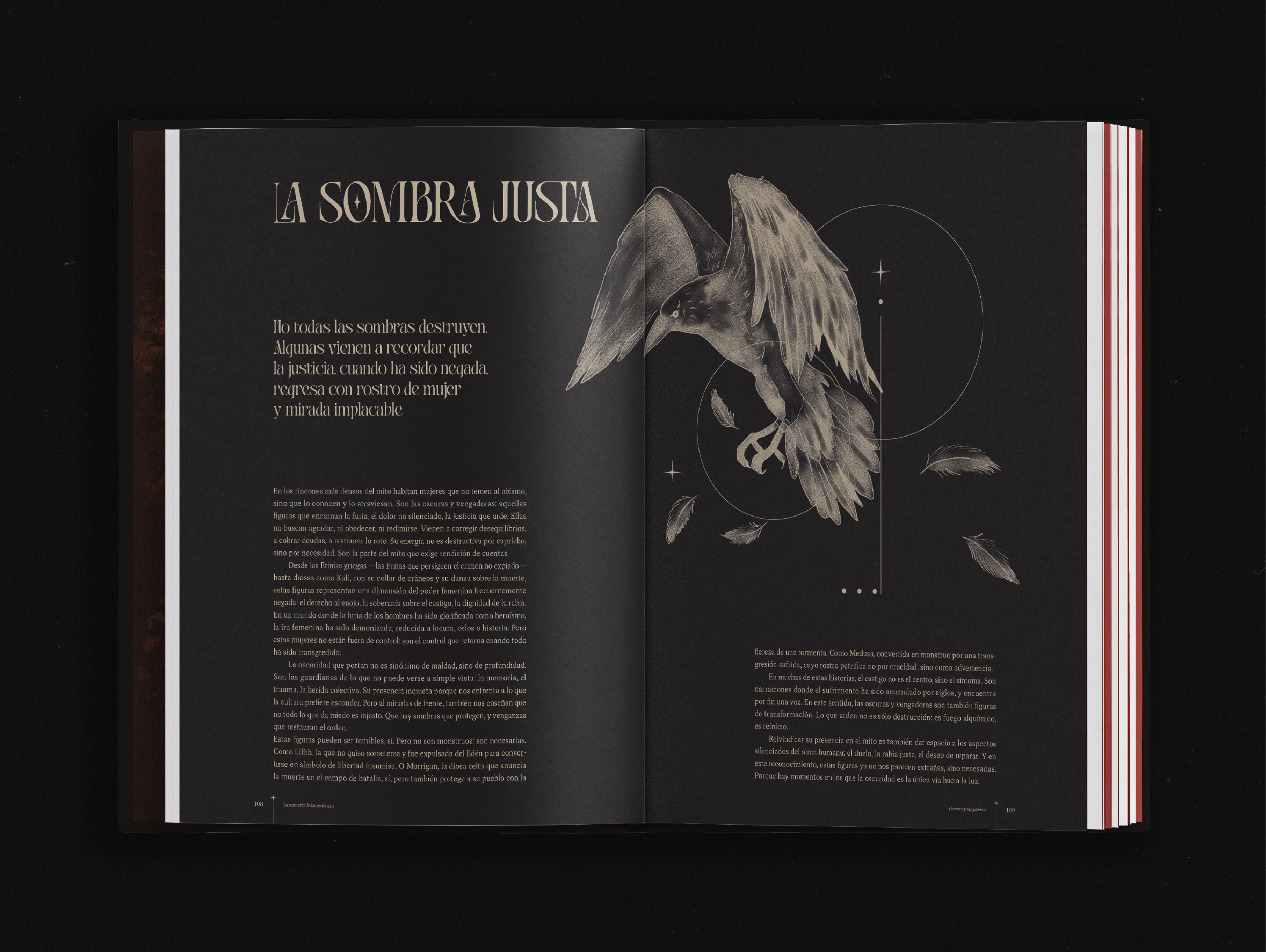
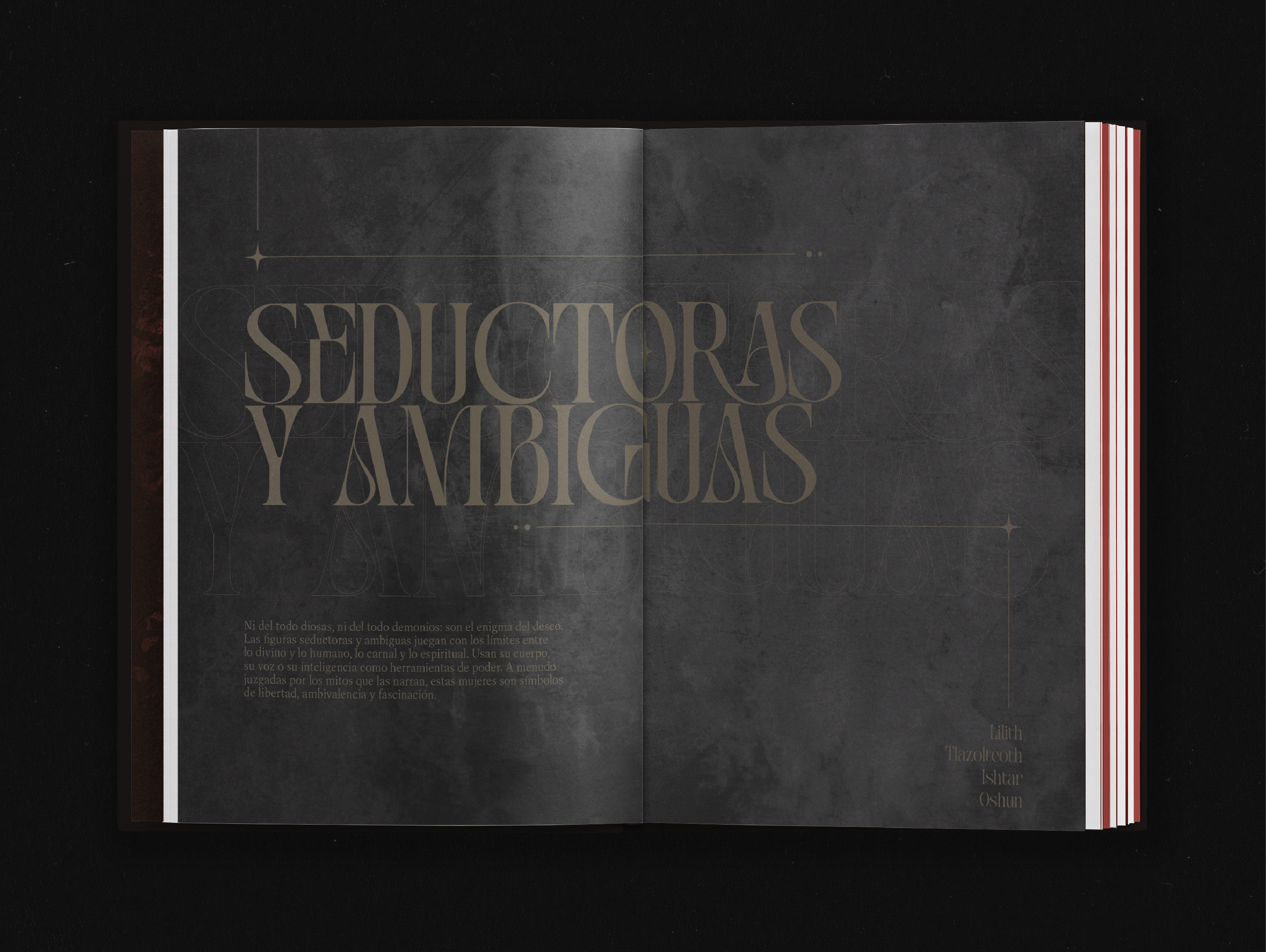
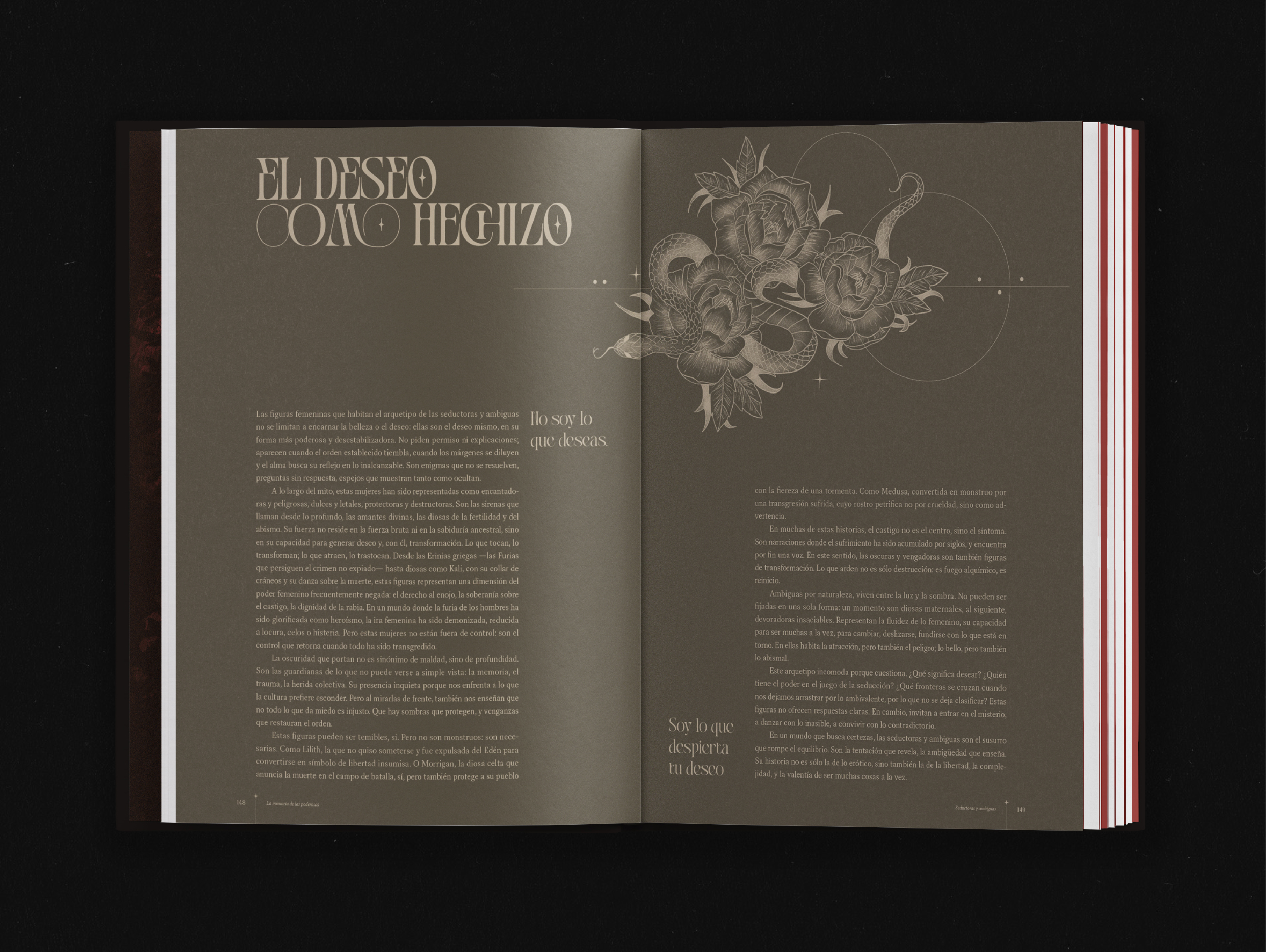
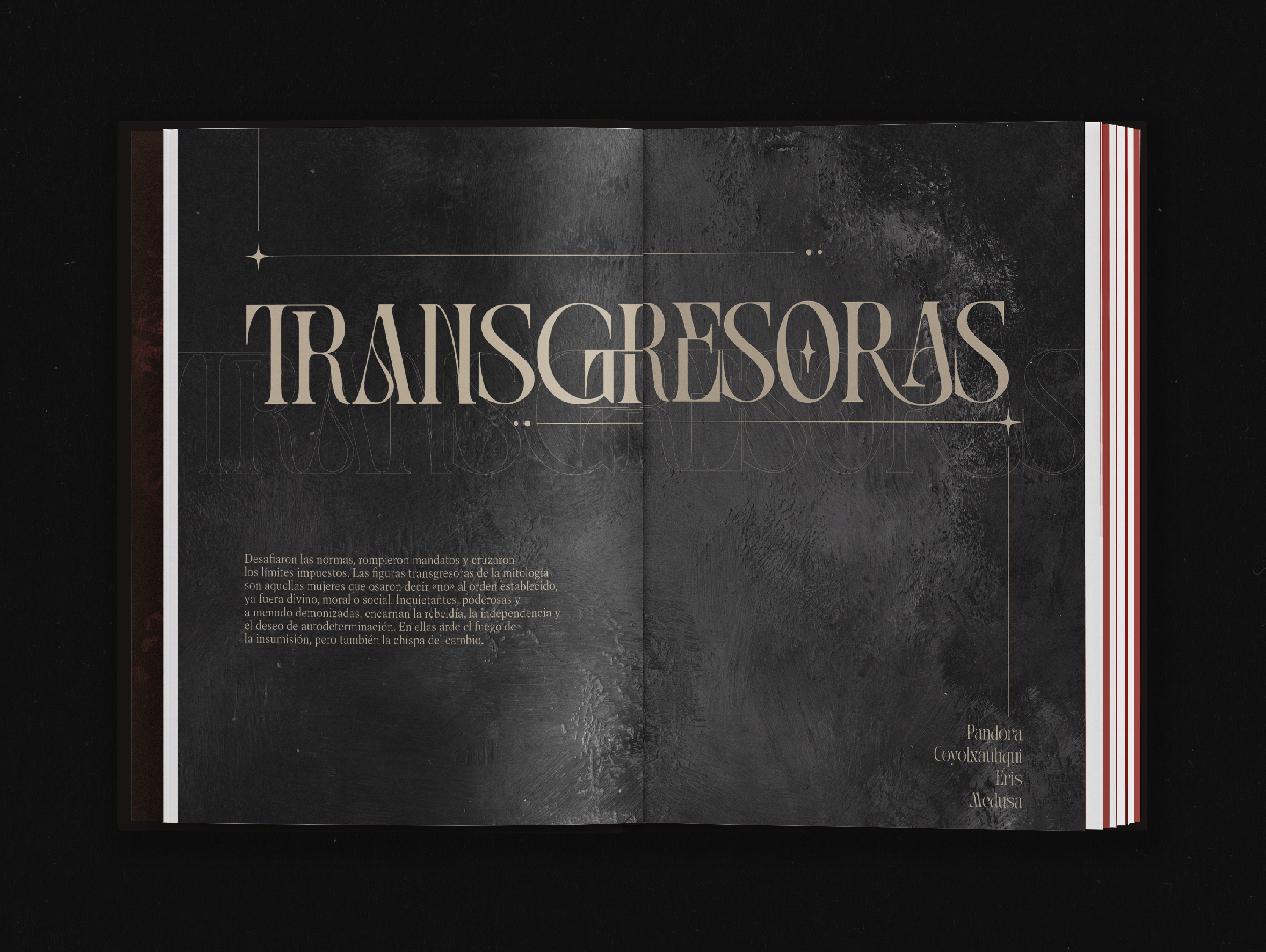
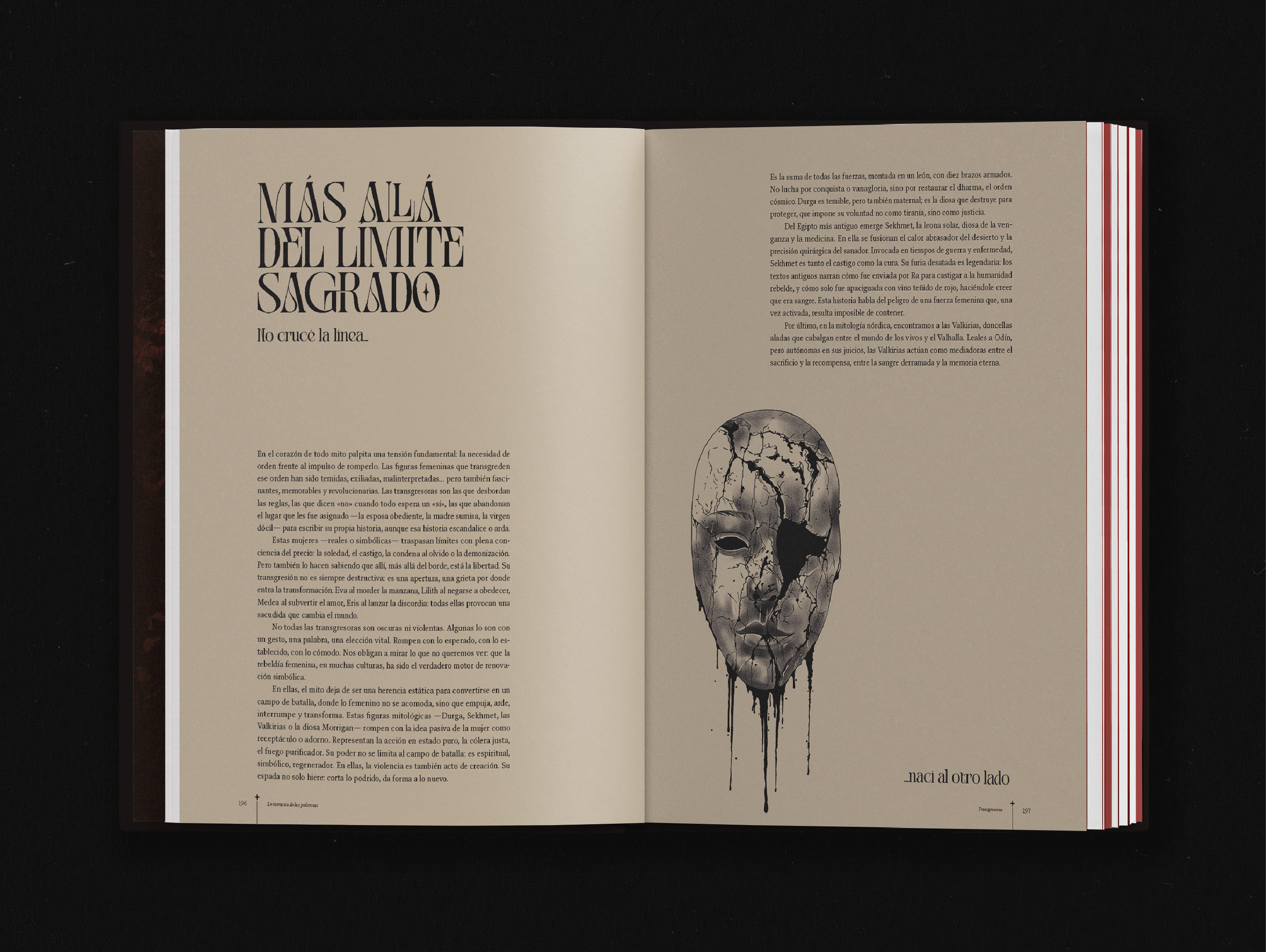
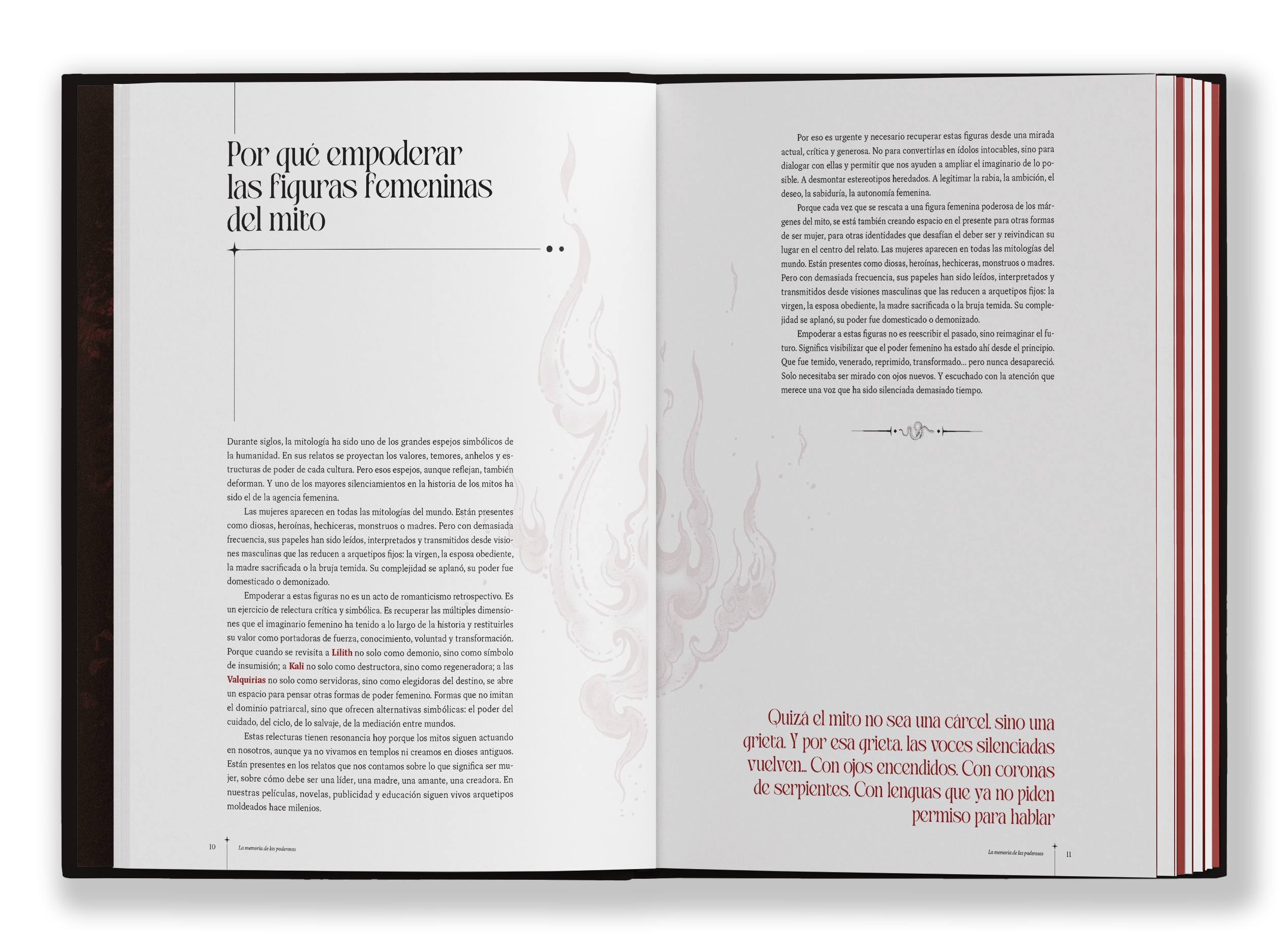
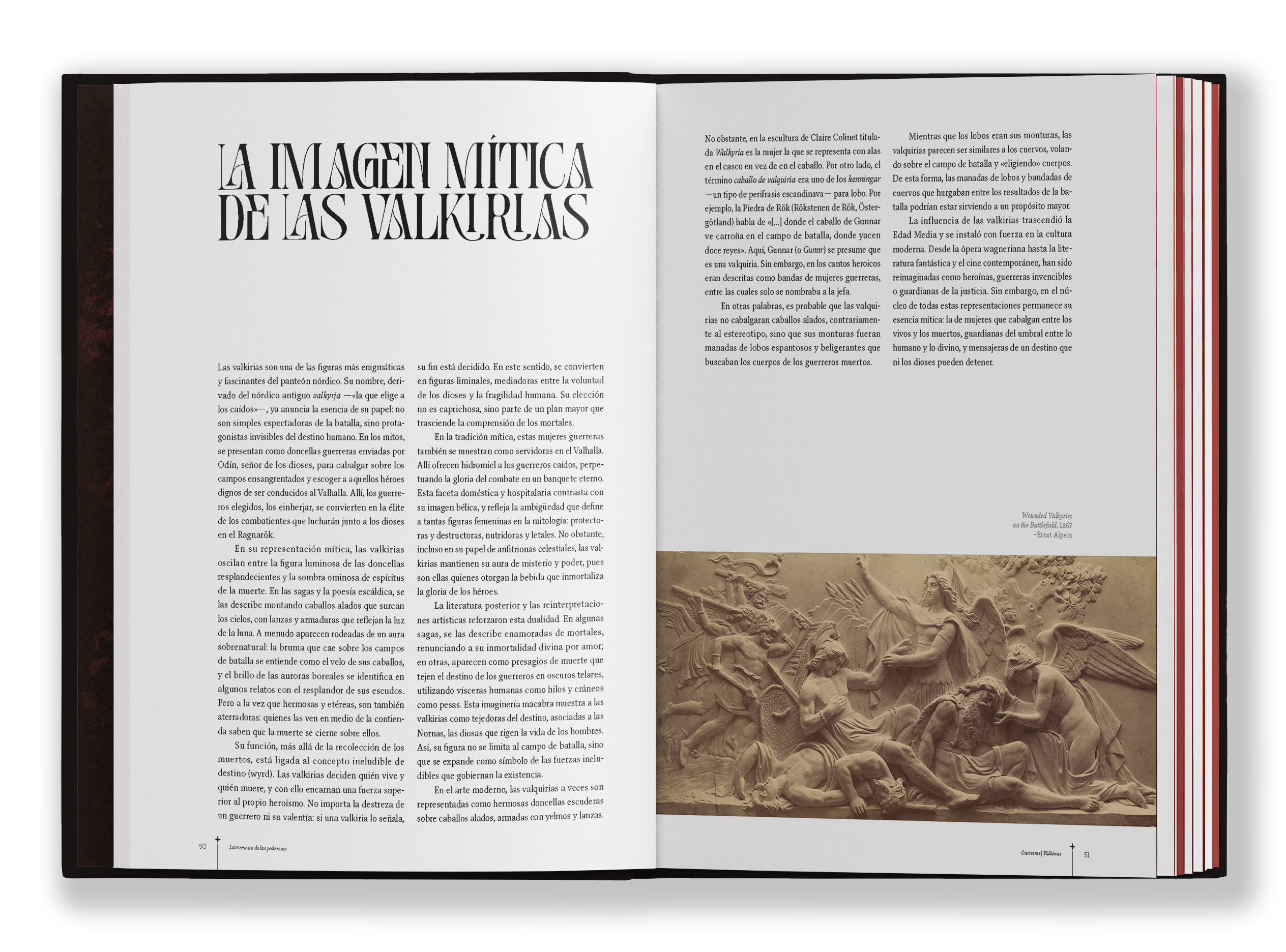
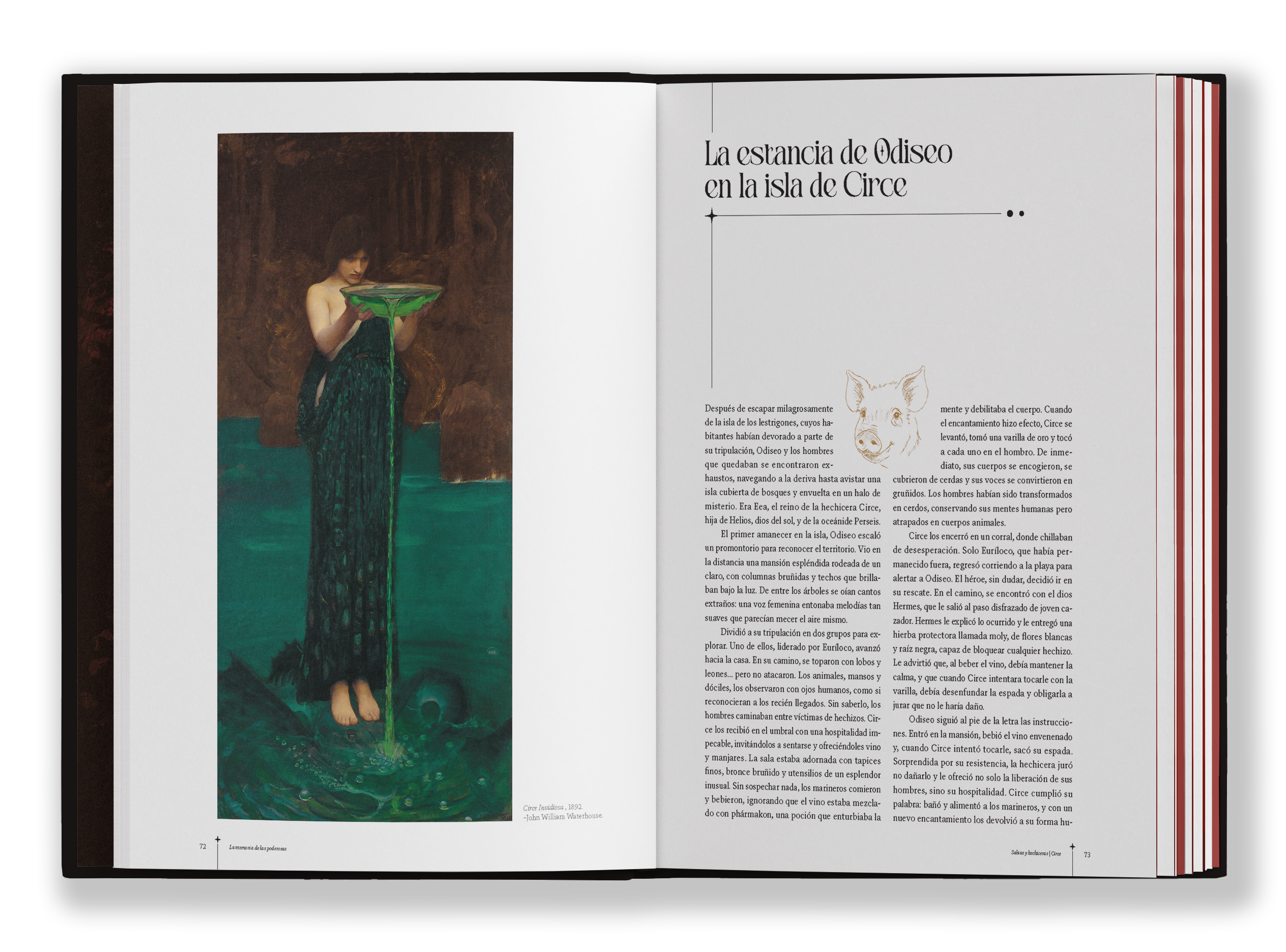
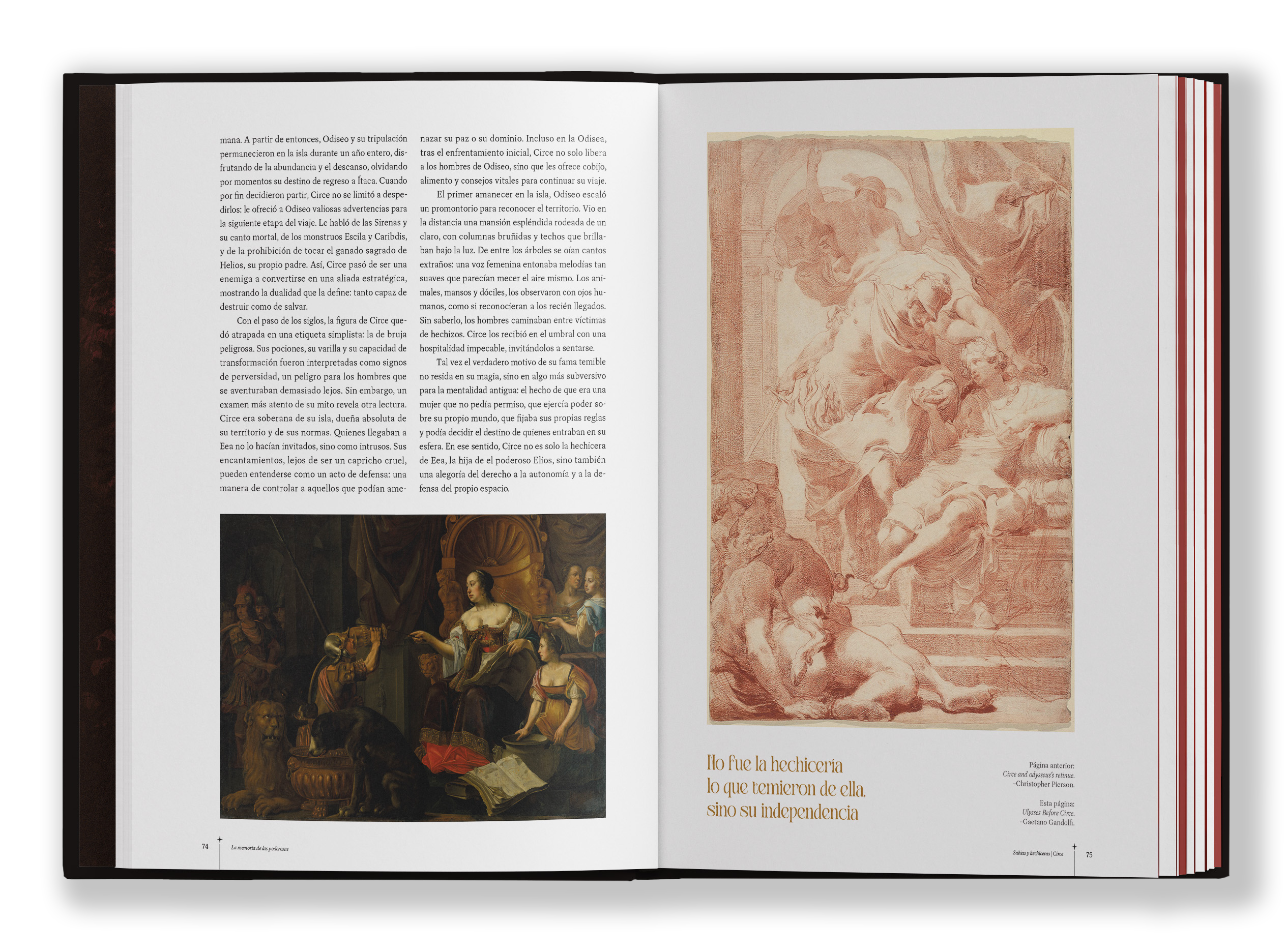
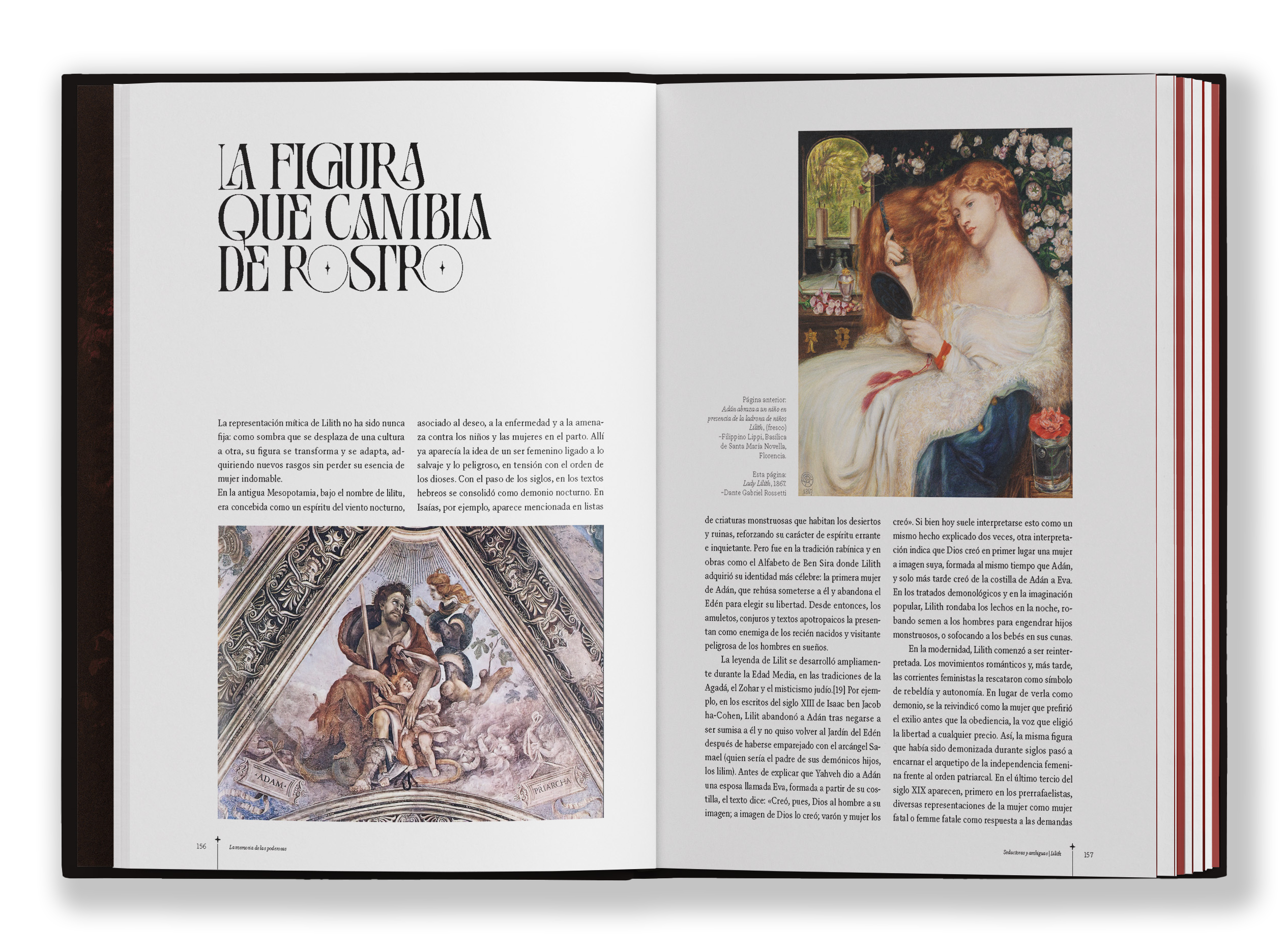
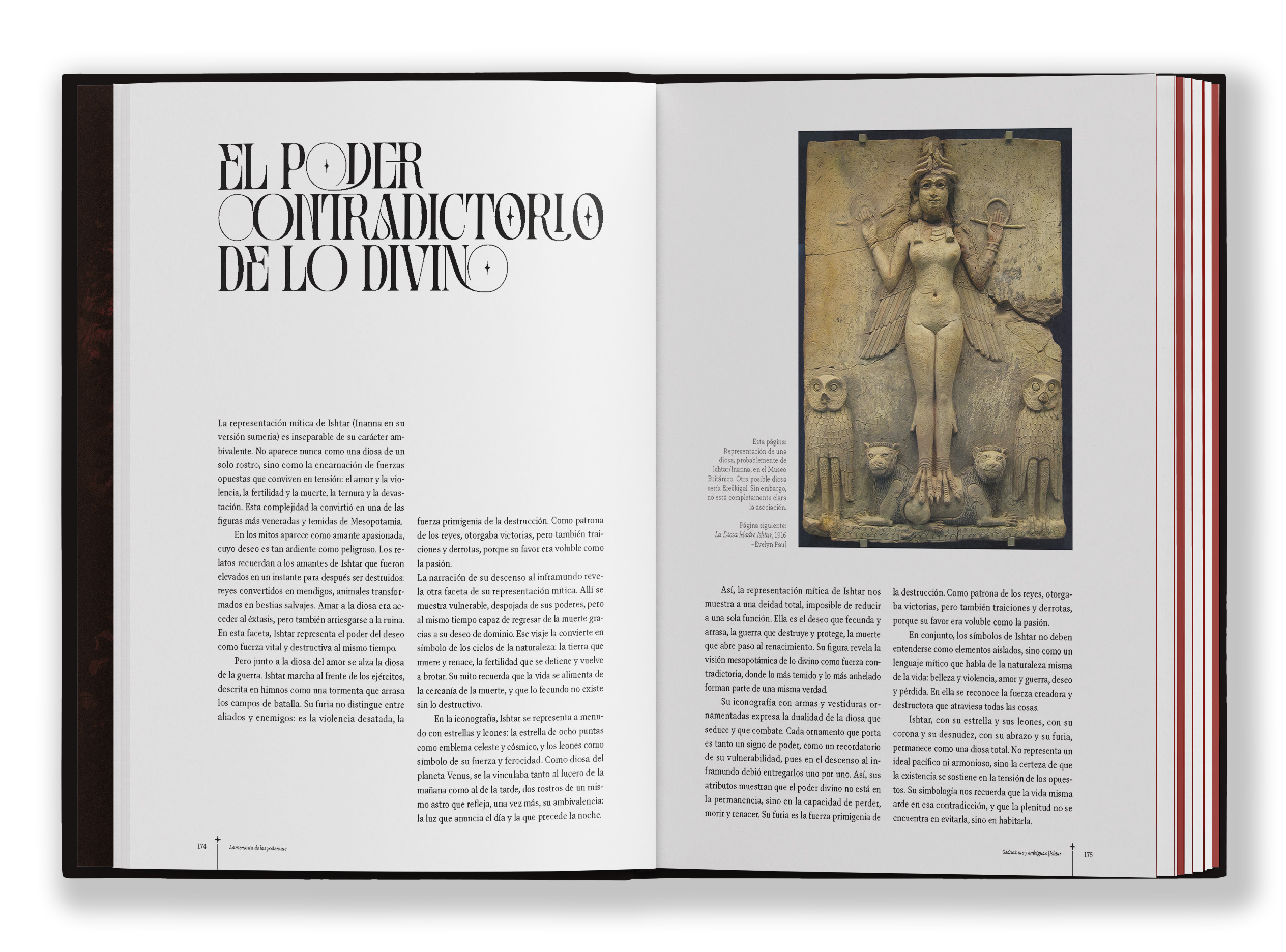
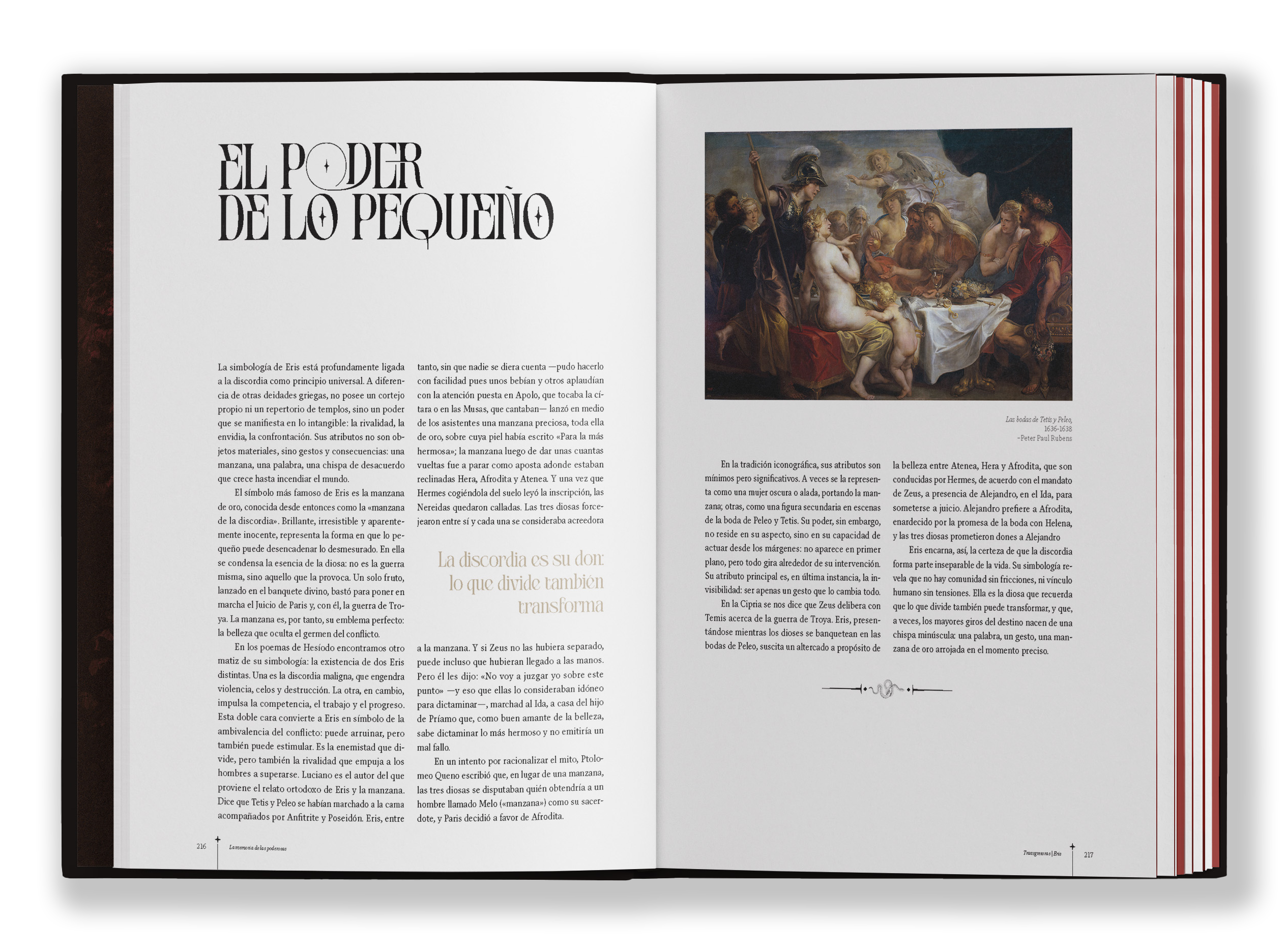
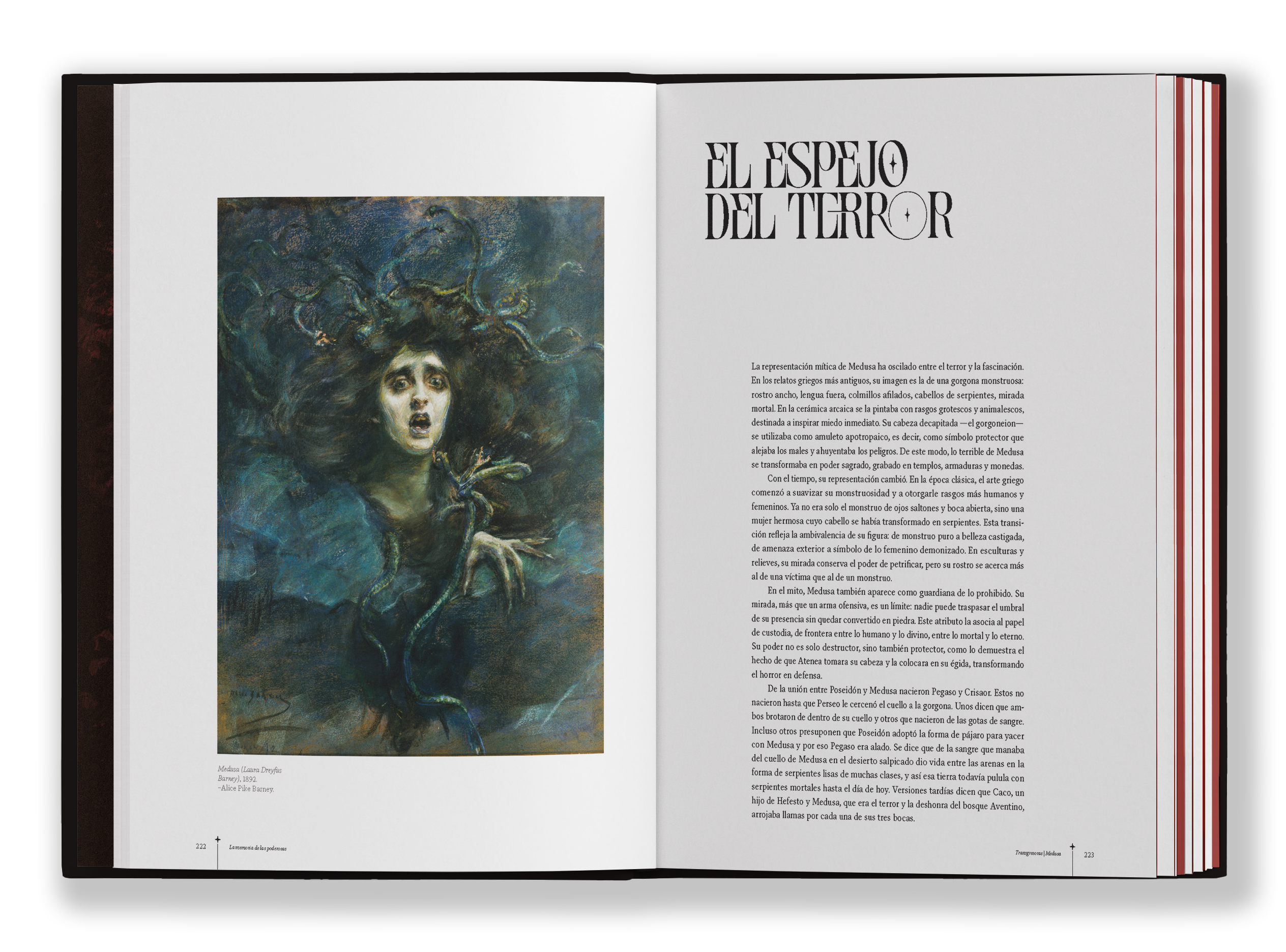
The interior design combines text columns (alternating between one and two) with sections of real artworks — some placed full-bleed — pull quotes in modern Gothic type, and carefully controlled white space that lets the content breathe without sacrificing the visual intensity the subject demands.